
Recent M&A Observations
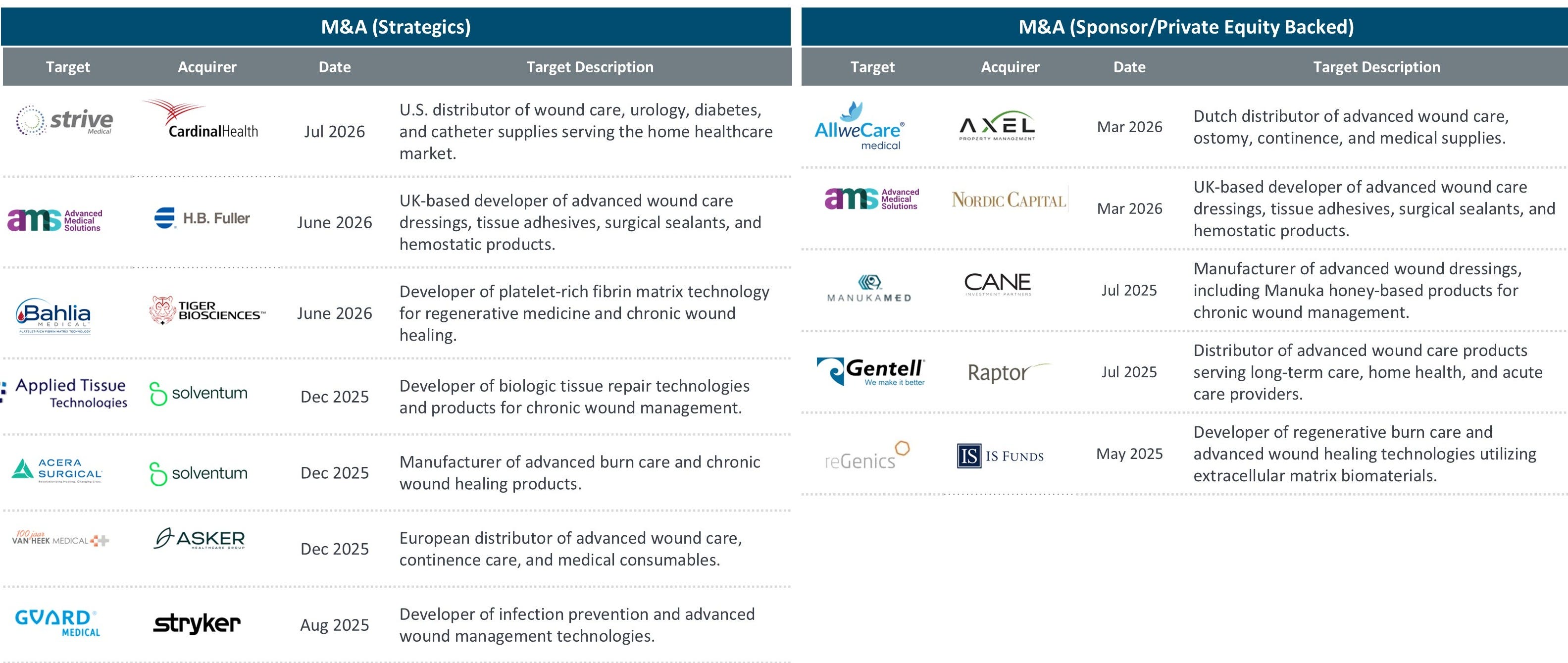
Strategics are broadening wound care portfolios: Buyers are adding advanced dressings, regenerative technologies, burn care, infection prevention, and home-care distribution to deepen category exposure and expand cross-selling opportunities.
PE is targeting recurring, fragmented platforms: Sponsor-backed activity remains concentrated in advanced dressings, specialty distribution, chronic wound products, and regenerative technologies, where repeat utilization and fragmented markets support consolidation.
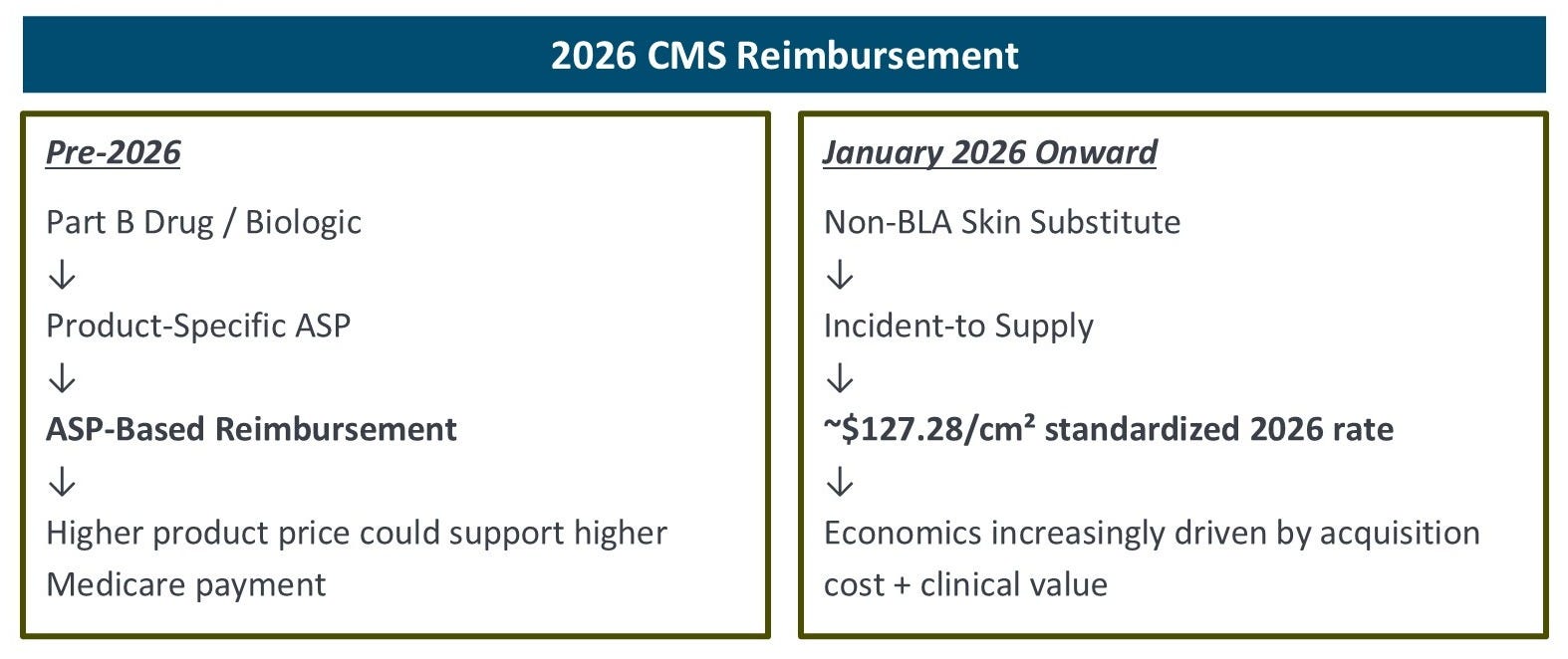
Reimbursement is reshaping deal underwriting: The 2026 CMS skin-substitute reset reduces the premium-pricing advantage of certain tissue products, increasing the importance of product cost, clinical evidence, regulatory classification, and care-setting exposure.
Commercial quality is becoming more important: Buyers favor platforms with differentiated outcomes, recurring utilization, broad distribution, and reimbursement resilience over businesses dependent on a narrow product or reimbursement model
Select Wound Care Transactions: Last 18 Months
Advanced Wound Care Market Overview
The global advanced wound care market is approximately $12B, with the U.S. at roughly $5.5B, supported by aging populations, diabetes, obesity, and rising chronic wound prevalence.
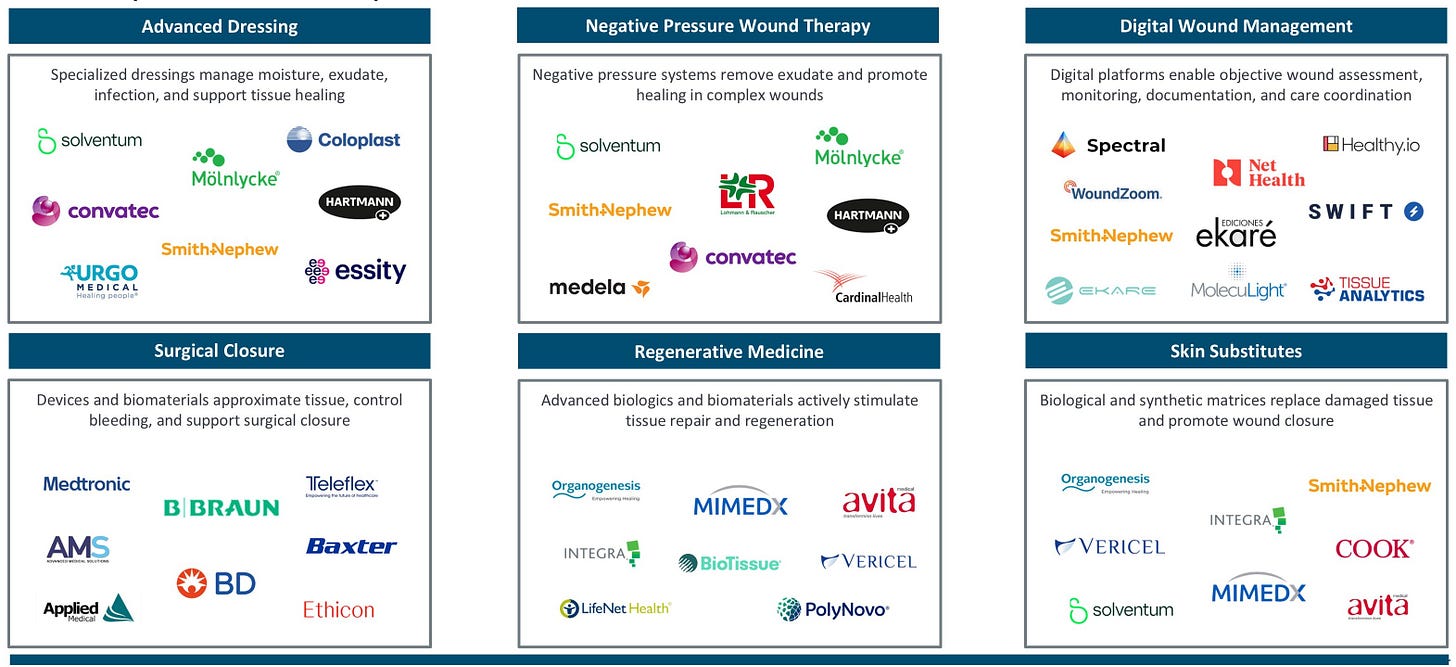
Providers are moving beyond passive dressings toward advanced dressings, negative pressure wound therapy (NPWT), biologics, and regenerative therapies, while more care shifts to outpatient and home settings.
Growth is increasingly driven by single-use technologies, digital wound management, advanced biomaterials, and regenerative platforms.
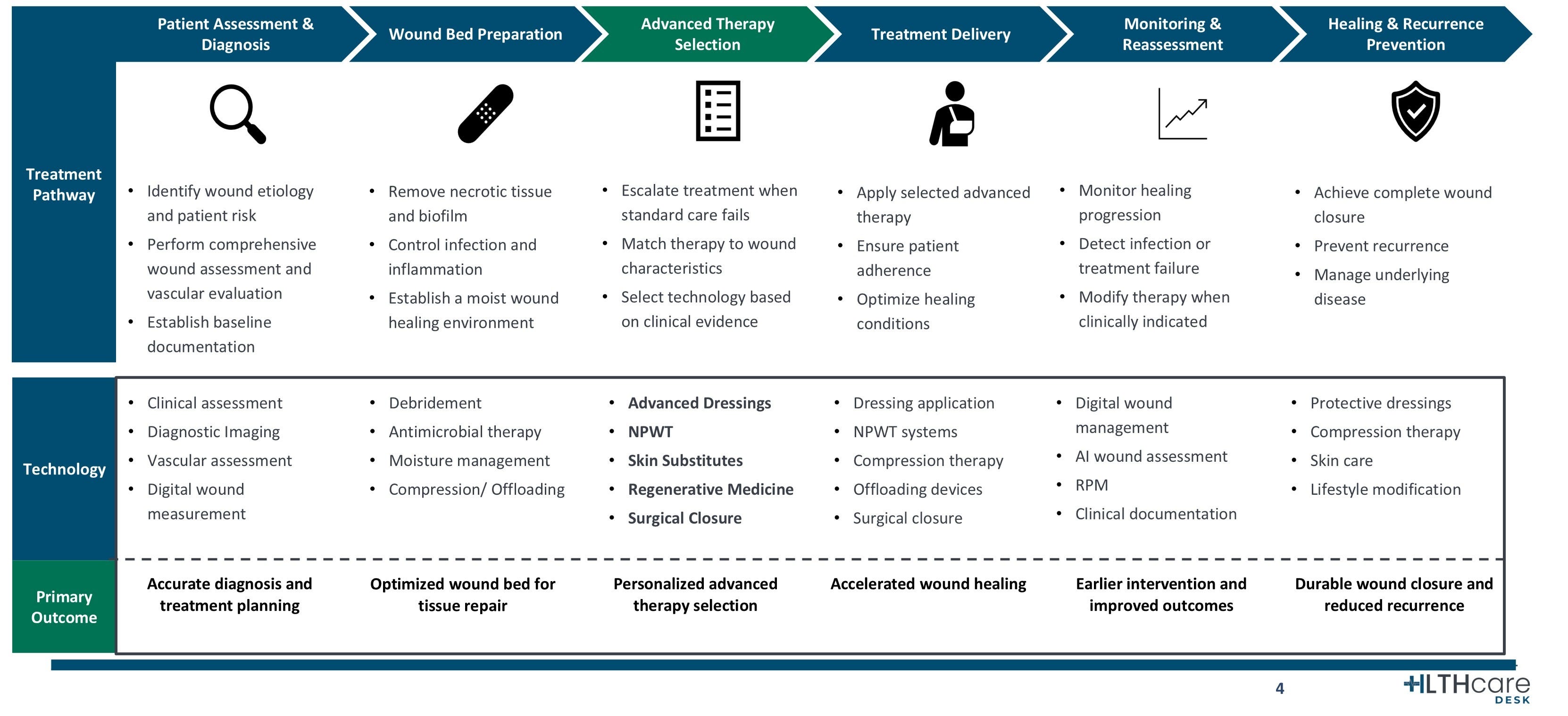
Advanced Wound Care Treatment Pathway
Wound Care Commercialization & Recurring Revenue
Business Model: Recurring consumables, equipment-linked disposables, per-application therapies, and increasingly software and monitoring products.
Recurring Revenue Drivers: Repeat dressing changes, NPWT therapy days, proprietary consumables, and embedded clinical protocols create recurring utilization and increase customer lifetime value.
Commercialization Roadmap: Successful commercialization typically progresses from regulatory clearance and clinical validation to reimbursement, institutional access, pilot adoption, and broader commercial scale.
Indicators of Scale: Manufacturing capacity, distribution reach, formulary and GPO penetration, and conversion of pilots into standardized protocols are key signals of commercial maturity and operating leverage.
Reimbursement & Regulatory Landscape
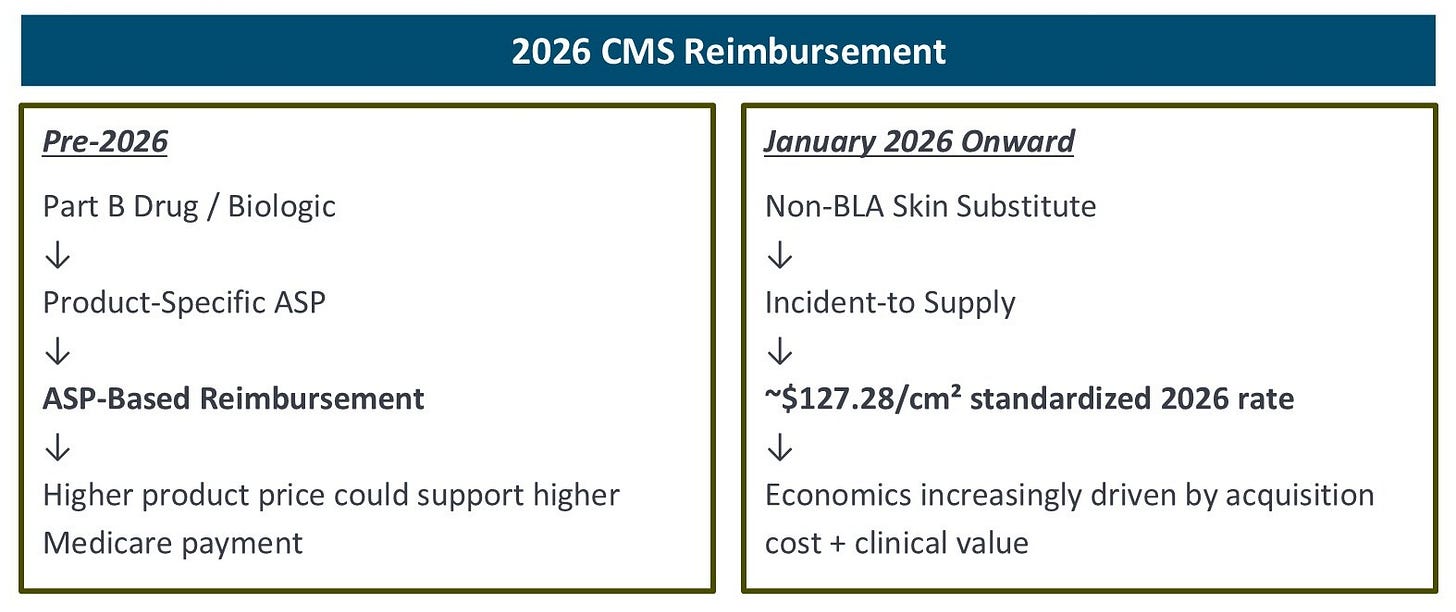
CMS reimbursement reform is resetting skin-substitute economics: Beginning in 2026, CMS moved certain skin substitutes from ASP-based reimbursement to a standardized payment framework, reducing the pricing advantage of premium products and increasing provider sensitivity to acquisition cost.
The reimbursement shift is accelerating industry consolidation: Manufacturers with heavy exposure to physician-office skin substitutes face greater pressure.
Regulatory pathways create different capital and evidence requirements: Advanced dressings, synthetic matrices, and many wound care devices can access the market through 510(k) clearance, while certain human tissue products may fall under Section 361 or require the more rigorous Section 351 BLA pathway.
Clinical evidence is becoming a stronger competitive differentiator: Section 351 products require more extensive clinical development, while broader regulatory scrutiny and EU MDR requirements are raising compliance costs.
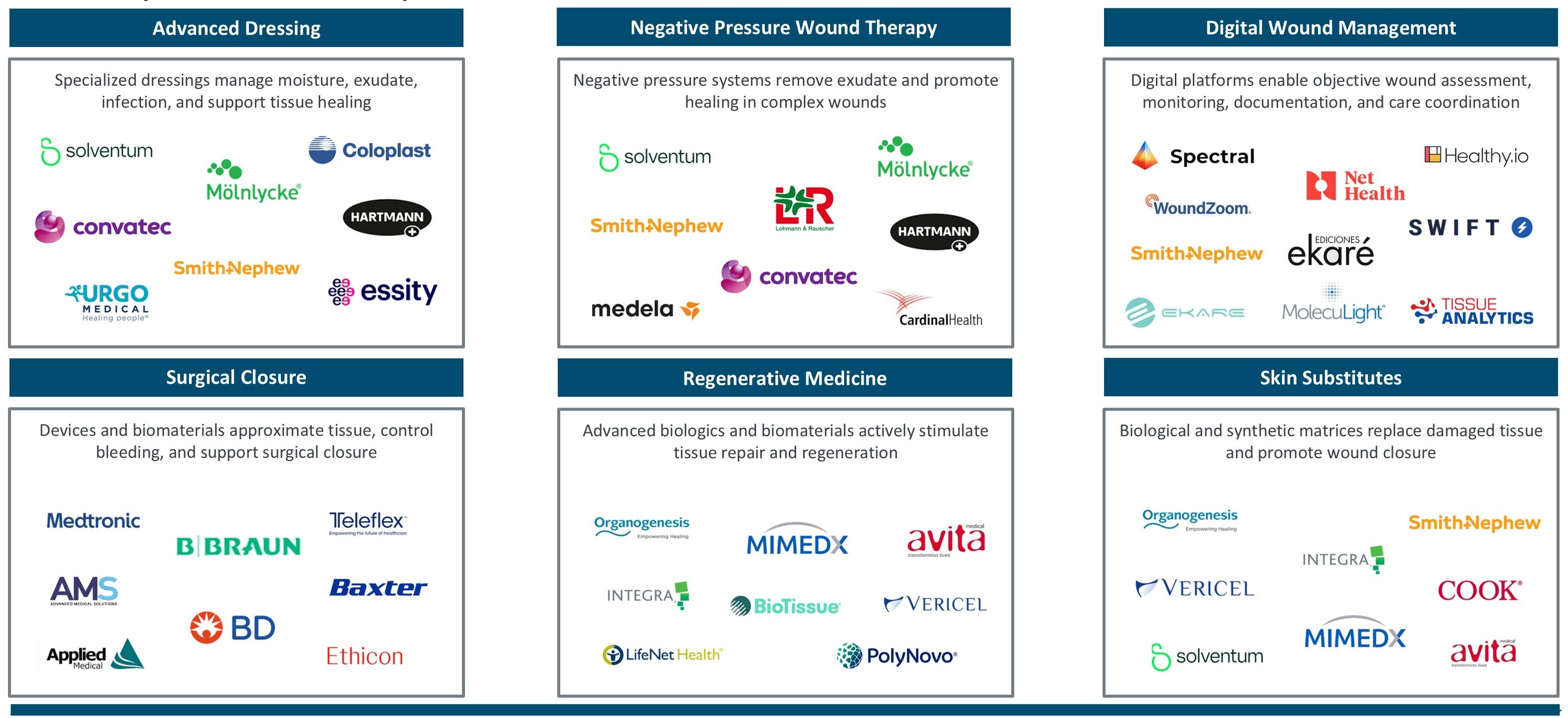
Wound Care Market Map
Please see the detailed report below