


Recent T-Cell Engager (TCE) Deals in Autoimmune
Strategic value is shifting toward de-risked, differentiated and scalable TCE platforms
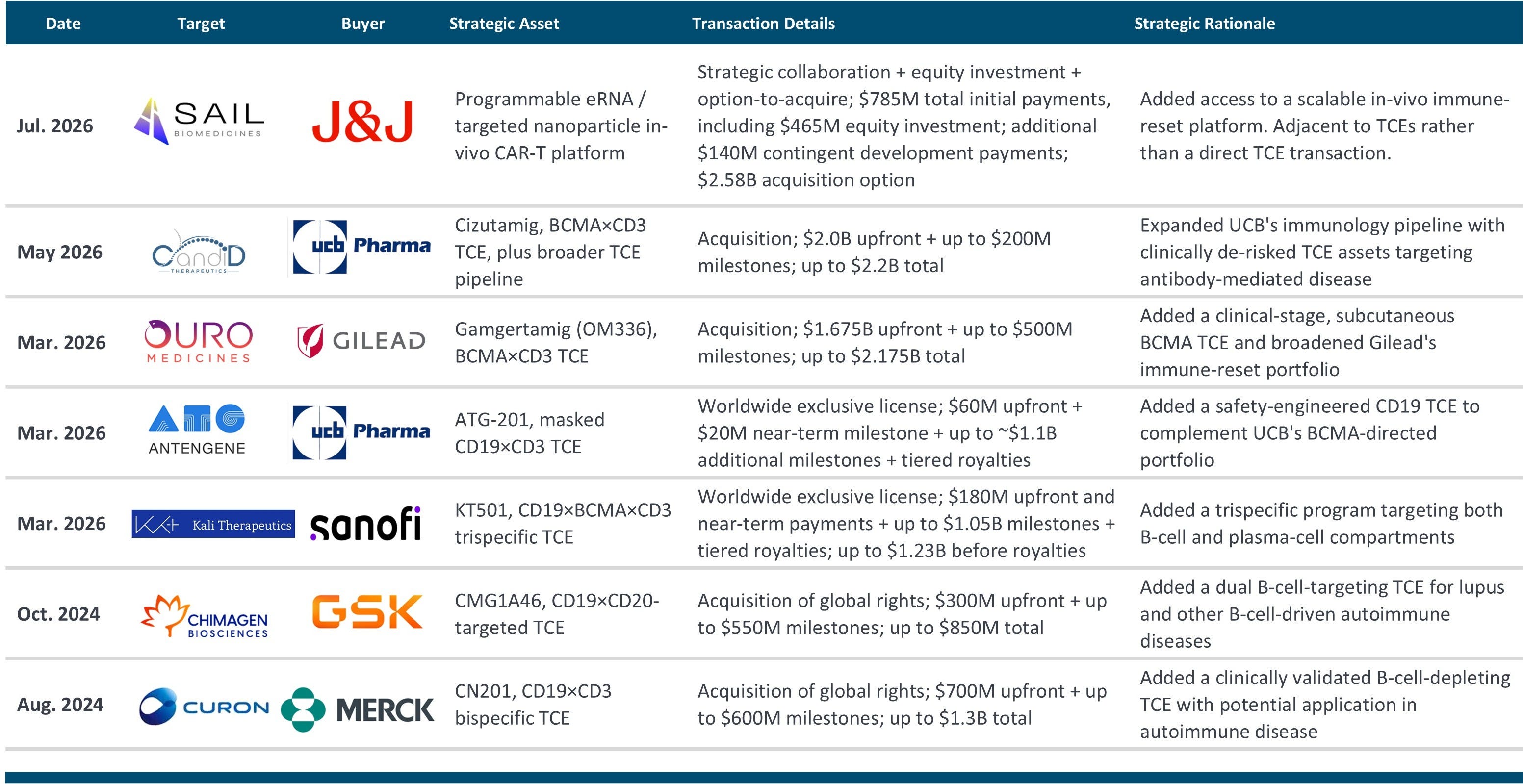
TCE Market Map
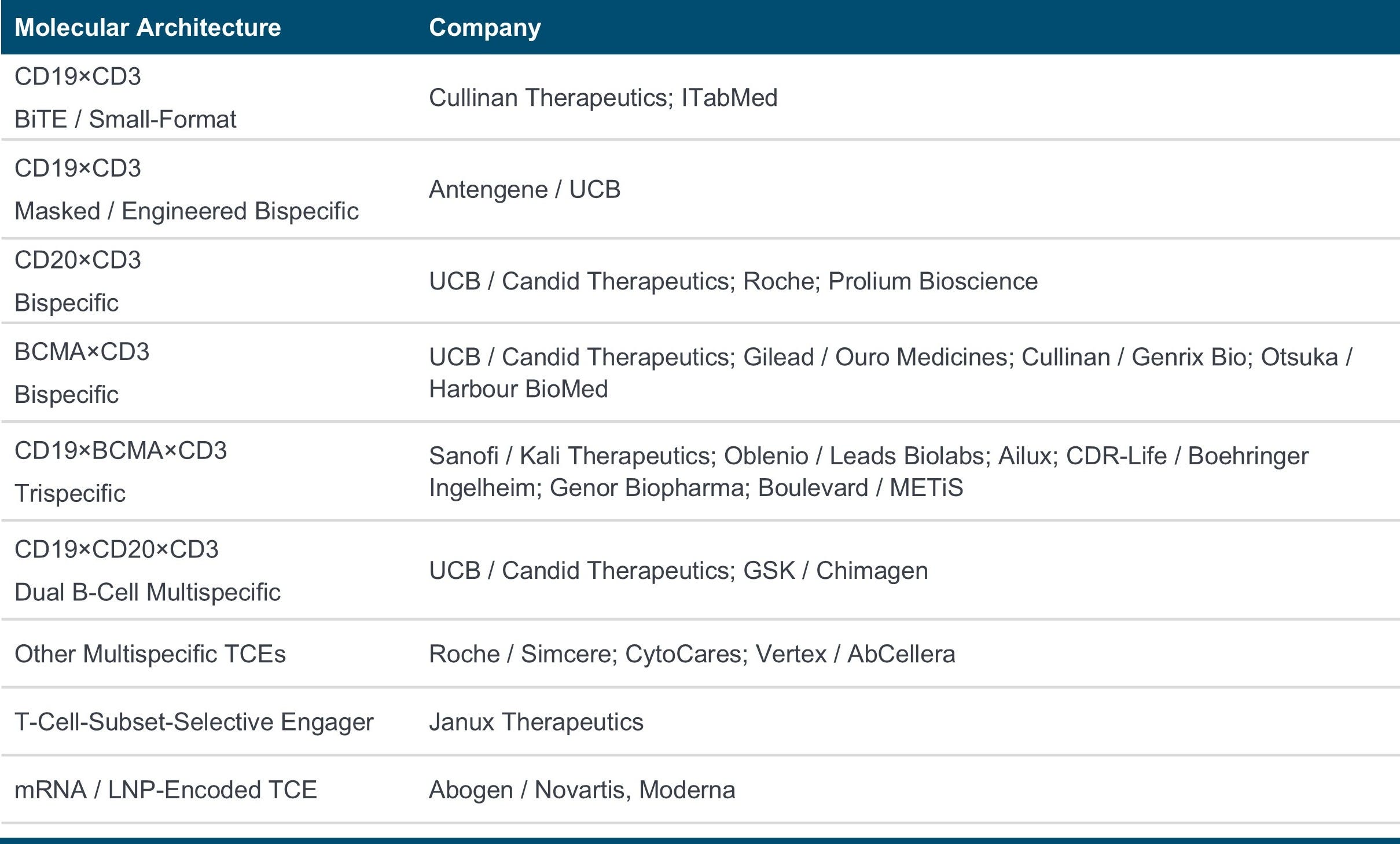
TCE Proposed Mechanism: Immune Reset
Autoimmune therapy is shifting from chronic pathway suppression toward deeper depletion of disease-sustaining immune cells. Conventional immunosuppressants and pathway-specific biologics can control disease activity but typically require chronic administration. TCE represent a different therapeutic approach by recruiting endogenous T cells directly to pathogenic B cells or plasma cells.
Limitations of Conventional Anti-CD20 Depletion
Rituximab and other anti-CD20 antibodies can effectively deplete circulating B cells but may leave residual B-cell populations in lymphoid tissues and other disease-relevant compartments. CD20 also does not cover early B-cell precursors, plasmablasts or plasma cells, allowing these populations to persist, repopulate the B-cell compartment or continue producing pathogenic autoantibodies.
B-Cell Differentiation Creates Different Therapeutic Windows
A simplified disease-relevant B-cell lineage can be viewed as:
Early B-cell precursor → naïve B cell → mature B cell → memory B cell → plasmablast → long-lived plasma cell
CD19, CD20 and BCMA cover different parts of this continuum, making target selection a key determinant of depletion breadth and the residual immune-cell populations that may continue to sustain or regenerate disease.
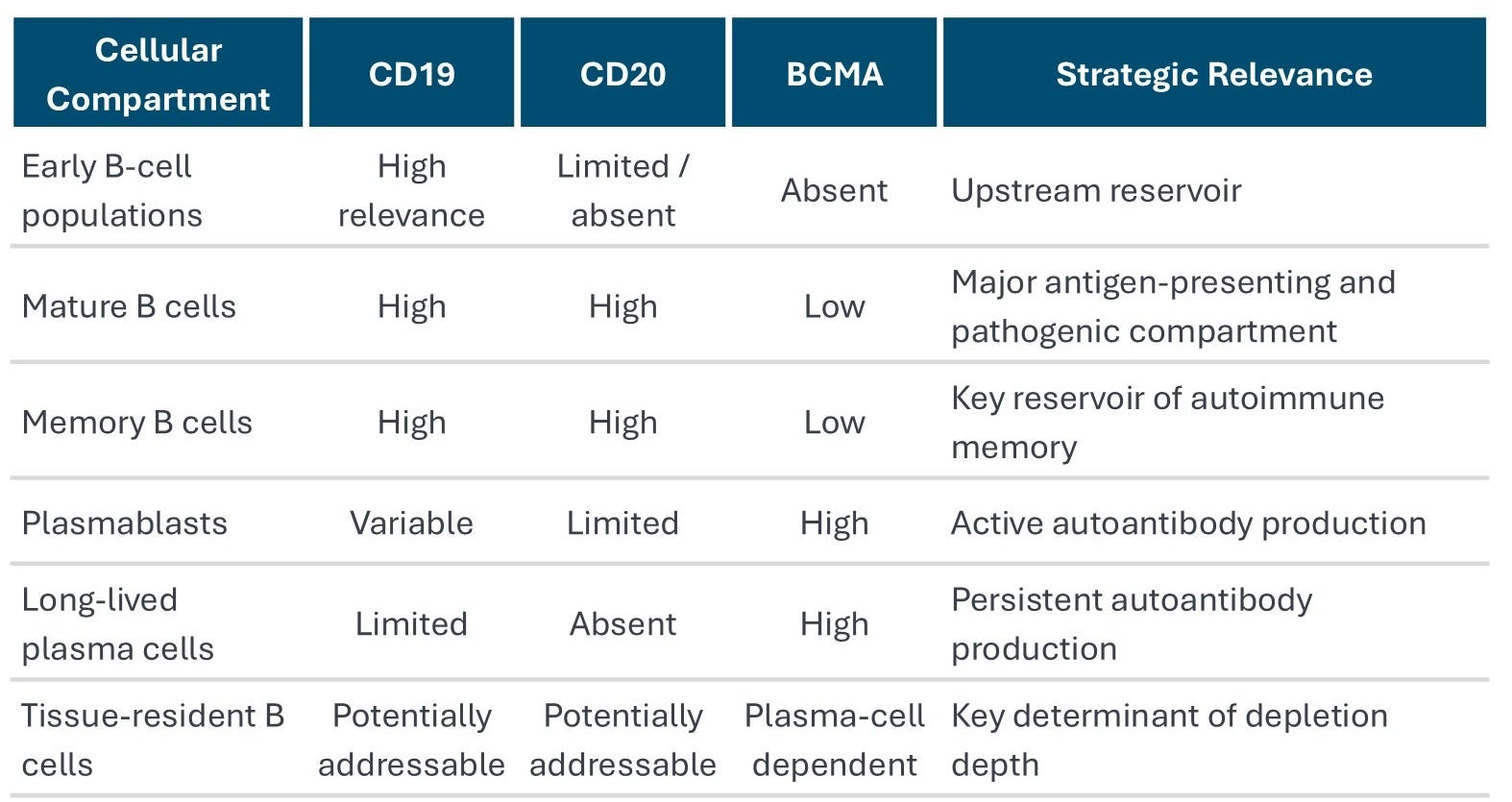
TCEs redirect endogenous T cells against CD19-, CD20- or BCMA-expressing cells to drive deeper B-cell and/or plasma-cell depletion, with the goal of healthier immune reconstitution and sustained treatment-free benefit.
TCE Target and Molecular Architectures
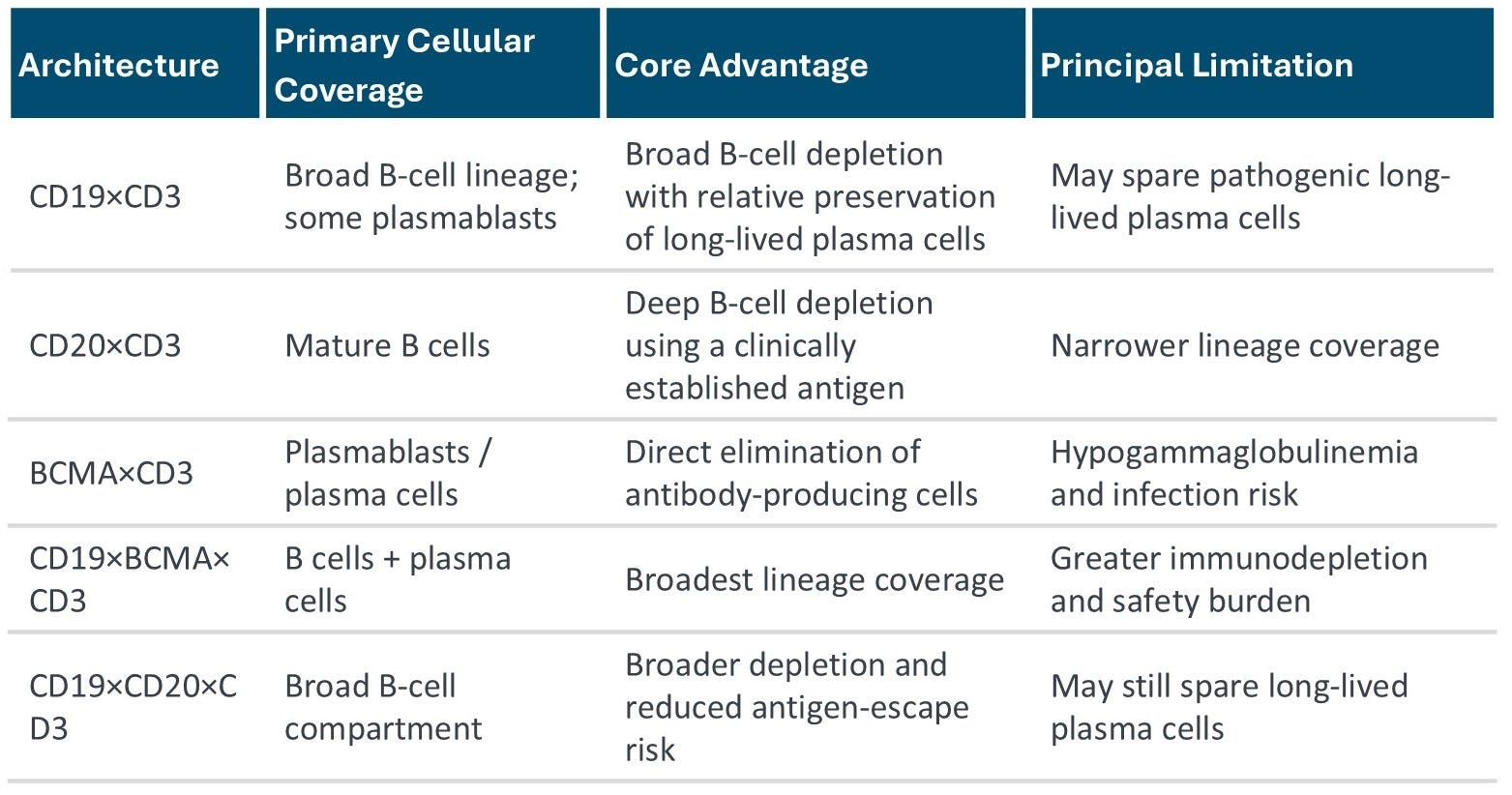
CD19, CD20 and BCMA cover different stages of B-cell differentiation, while molecular format and engineering strategy determine how TCEs balance depletion depth, tissue penetration, pharmacokinetics and systemic T-cell activation.
Molecular and Safety-Engineering Formats
TCE development is increasingly focused on improving the therapeutic index along with maximizing cytotoxic potency.
BiTE-like constructs use smaller molecular formats that may improve tissue diffusion but typically require half-life extension to support practical dosing.
Full-length IgG-like TCEs offer longer systemic exposure, conventional antibody pharmacokinetics, structural stability and established manufacturing, but require tighter control of prolonged systemic T-cell activation.
Trispecific and multispecific TCEs add a second disease-cell target or an additional activation/costimulatory signal to broaden lineage depletion, reduce antigen escape or strengthen target-cell killing, while increasing molecular complexity and potentially immune activation.
Masked or conditionally active TCEs restrict CD3 engagement until the molecule reaches the intended target environment, aiming to preserve local cytotoxicity while reducing systemic cytokine release.
CD3 affinity-detuned TCEs weaken CD3 binding so T-cell activation becomes more dependent on target-cell engagement, with the goal of reducing CRS while maintaining depletion.
mRNA/LNP-encoded TCEs produce the engager in vivo rather than administering recombinant protein directly. Potential advantages include smoother exposure, lower peak concentrations, flexible redosing and differentiated manufacturing and delivery, although clinical validation remains earlier.
BCMA-containing approaches provide the strongest direct plasma-cell depletion but can increase hypogammaglobulinemia and infection risk as depletion broadens. CRS and ICANS are being addressed through CD3 detuning, masking, subcutaneous administration and slower exposure. BiTE-like formats generally require half-life extension, IgG-like constructs provide longer conventional PK, and encoded approaches may enable more gradual endogenous exposure.
Outpatient feasibility is increasingly linked to lower peak exposure, SC dosing and fewer step-up requirements, while manufacturing complexity generally rises across multispecific, masked and encoded platforms.
Clinical Endpoints in Autoimmune TCE Development
Primary endpoints remain indication-specific, while steroid withdrawal, treatment-free remission and durability after finite therapy provide more differentiated TCE readouts.
SLE
Core efficacy endpoints: SRI-4, BICLA
Disease-control / remission measures: LLDAS, DORIS remission
Supporting measures: glucocorticoid reduction, complement normalization, anti-dsDNA decline
Potential immune-reset readout: sustained remission with reduced or discontinued steroids/background immunosuppression
Lupus nephritis
Key efficacy endpoint: Complete Renal Response (CRR), with definitions varying by trial
Core measures: proteinuria (typically UPCR), preserved/stable eGFR and protocol-defined glucocorticoid limits
Supporting measures: sustained renal response, proteinuria reduction and kidney-function preservation
Potential immune-reset readout: durable renal response with reduced need for chronic immunosuppression
Rheumatoid arthritis
Core efficacy measures: ACR20/50/70, DAS28, CDAI and clinical remission
Supporting measures / biomarkers: RF, ACPA/anti-CCP and, for TCEs, depth of B-cell depletion
Potential immune-reset readout: sustained remission after finite treatment with persistent disease control after background therapy reduction
Systemic sclerosis
Core efficacy measures: mRSS for skin disease, FVC for pulmonary involvement, CRISS/rCRISS composite measures
Supporting measures: ILD progression, qHRCT, DLCO, patient-reported outcomes and autoantibody changes
Potential immune-reset readout: durable stabilization or improvement with reduced background immunosuppression
Myositis
Core response endpoint: ACR/EULAR Total Improvement Score (TIS)
Component / supporting measures: MMT-8, muscle enzymes including CK, physician/patient global assessments and extramuscular disease activity
Potential immune-reset readout: durable major clinical improvement following finite treatment
ITP
Core efficacy measures: platelet response and sustained/durable platelet response
Supporting measures: bleeding, rescue-therapy use and reduction/discontinuation of concomitant therapy
Potential immune-reset readout: sustained platelet control after finite therapy without ongoing treatment
AIHA
Core efficacy measures: hemoglobin response, normalization of hemoglobin and transfusion independence
Supporting measures: normalization of hemolysis markers, response durability and reduction of corticosteroid requirements
Potential immune-reset readout: sustained hematologic response without ongoing immunosuppressive therapy
Oncology as the Clinical Precedent
Approved CD19-, CD20- and BCMA-directed TCEs have validated rapid and deep target-cell depletion across heavily pretreated hematologic malignancies. Oncology has also established the key class liabilities—CRS, neurotoxicity, infection, hypogammaglobulinemia, step-up dosing, intensive monitoring and, in some cases, hospitalization. These risks may be acceptable in refractory cancer, but set a materially higher therapeutic-index and treatment-logistics bar for autoimmune disease.
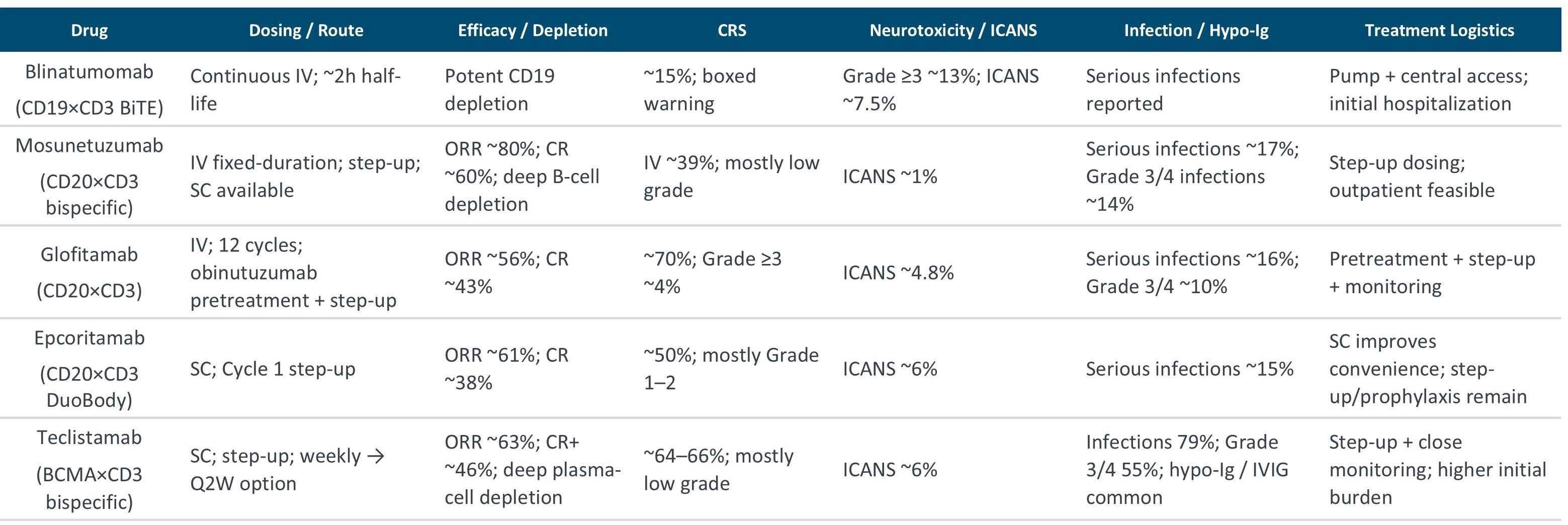
Teclistamab demonstrates the biological power of BCMA-mediated plasma-cell depletion, but was associated in oncology with approximately 90% hypogammaglobulinemia and 41.6% Grade 3/4 infections, alongside high CRS frequency.
Similarly, SC delivery alone is not sufficient to solve class toxicity: epcoritamab still requires step-up dosing and steroid prophylaxis, while CRS remained common in the oncology experience.
Clinical Bar for Emerging and Preclinical TCEs
Emerging programs will increasingly be assessed across five areas: depth, breadth, safety, convenience and durability.
Depth: Depletion should extend beyond peripheral blood into lymph nodes, bone marrow or disease-relevant tissue where pathogenic immune cells may persist.
Breadth: Target coverage should match disease biology, whether the relevant compartment is B cells, plasma cells or both.
Safety: Autoimmune programs need a materially better therapeutic index than oncology TCEs, particularly around CRS, ICANS, infection, hypogammaglobulinemia and cytopenias.
Convenience: The preferred profile moves toward SC or simple IV dosing, fewer step-up doses, outpatient administration and a short or finite treatment course.
Durability: The most differentiated durability signal would be sustained treatment-free remission after therapy stops, particularly if maintained after B-cell reconstitution.
The bar is shifting toward deep, disease-relevant depletion with autoimmune-appropriate safety and durable benefit after finite treatment.
Source: Public Filings, Wall Street Equity Research