


Transaction Structure and Investment Rationale
HPS Replaces WCAS as Majority Investor in Center
Well Clinics On October 13, 2026, Humana announced that HPS Investment Partners, part of BlackRock, would acquire WCAS's equity stake in joint ventures covering nearly 150 CenterWell senior primary care clinics for approximately $2.8 billion. Under the agreement,
• HPS will become the majority equity owner, while CenterWell will retain a minority stake and continue managing clinic operations. The transaction is expected to close in Q4 2026.
• This transfers WCAS's ownership to HPS transition and grants Humana time to develop its clinic network and raise profitability.
Why Humana Is Restructuring the Partnership
The transaction eliminates WCAS's put options, reducing Humana’s near-term buyout obligations and potential cash requirements. The new joint venture with HPS will deploy additional capital over the next two years and fund new de novo openings and pursue strategic acquisitions. The transaction will lower funding costs compared with the previous WCAS partnership.
• Clinic Repurchase Rights: CenterWell retains a structured call option to acquire the clinics from the joint venture from 2028.
• Investor Exit Provisions: HPS holds right to initiate sale if any clinical assets remain in the joint venture at the end of 2033. Transaction Valuation Assessment Assuming WCAS held a 60% stake, the transaction implies an estimated valuation of ~$18.67 million/clinic for the ~150 clinics.
Development of the WCAS Joint Ventures and Legacy Options

Partnership Structure and Financial Implications
Humana had call option to purchase WCAS's majority equity stake beginning five years after each clinic cohort opened, while WCAS held a put option for Humana to buy out its interest starting seven years post-opening.
The purchase price was structured at fixed exit multiple of 1.5x - 2.5x of clinical revenues. Repurchasing mature clinics across the JV cohorts would reach $3 - 5 billion between 2026 and 2033.
CenterWell Overview
Operating Structure
CenterWell operates through wholly owned clinics, joint ventures and affiliated independent physician networks. The ~150 clinics in JV account for ~37% of its physical primary care footprint but have a smaller patient base per clinic than wholly owned locations. These 150 clinics have younger development profile and are operating at or near breakeven. The profitability of the ~150 clinics under the JV depend on successful execution of the clinic maturation J-curve and medical loss ratios (MLR) reduction.
J-Curve: The trajectory of clinic profitability, initially operating on losses followed by improving margins as patient panels scale, operating leverage increases, and clinics mature.
Medical Loss Ratio: % of capitated revenue spent on medical care, calculated as medical costs divided by capitated revenue.

Clinic Profitability Depends on Patient Panel Maturity
CenterWell's senior-focused care model serves approximately 650 patients per mature physician, compared with 2,000–2,500 in traditional primary care. Smaller patient panels allow more time for chronic disease management, potentially reducing hospital admissions and improving patient retention despite higher staffing costs. For the JV portfolio, profitability depends on patient growth, clinic maturity and medical-cost management.
CenterWell Clinic Economics & Reimbursement Models
Revenue Generation and Profitability
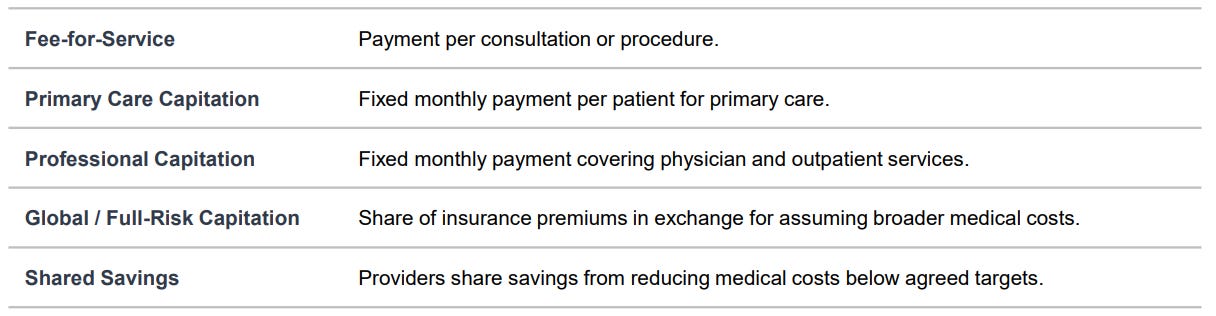
CenterWell's risk-based primary care model generates revenue through fixed monthly payments per covered patient under capitated contracts. Clinics are responsible for certain medical costs under their contracts, and their profitability matures with patient volume growth, and operating leverage. Effective preventive care reduce hospital admissions and specialist expenses, improving margins.
Cash Flow and Investment Returns
New clinics require significant upfront investment and typically operate at a loss until their patient base reaches sufficient scale. Medical margins do not directly translate into cash flow, as staffing, rent, administration, insurance, claims reserves and capital expenditure must still be covered.
Reimbursement Models
Major Competitors

CenterWell’s Max Health Acquisition – 2026
Strategic Rationale
MaxHealth's clinical footprint includes a network of 54 owned primary care clinics, 4 owned specialty or ancillary clinics, and 24 downstream affiliate clinics across Central and South Florida. This network serves a total patient base of over 120,000 individuals, including morethan 80,000 patients enrolled in value-based care programs.
MaxHealth acquisition filled key geographic gaps in Florida.
Implied Valuation Multiples
The transaction involved ~$908 million in net cash consideration. Based on MaxHealth’s estimated EBITDA of $70 million (William Blair), the purchase price implies an EBITDA multiple of ~13x–14x.
U.S. Physician Services: Market Overview
Market Structure and Demographics
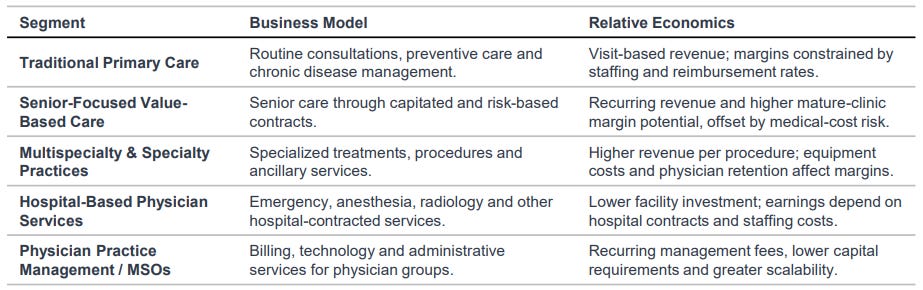
The U.S. physician services market includes primary care, specialty practices and hospital-based clinical services. Growth is driven by an aging population, rising chronic disease prevalence and increasing demand for ongoing medical care. Meanwhile, higher staffing and administrative costs are accelerating the shift from independent practices toward hospital and corporate ownership.
For senior primary care operators like CenterWell, Medicare Advantage enrollment and value-based reimbursement models offer recurring patient-based revenue but expose providers to medical-cost inflation and reimbursement changes. As a result, profitability depends on patient retention, clinic maturity and effective management of healthcare expenses.
Physician Services Segmentation
Physician Services: M&A Trends & Outlook
• PE Consolidation: PE firms acquire physician practices to expand regional coverage, strengthen payer leverage and reduce overhead, although integration costs and physician turnover can erode returns.
• Acquisition Strategies: Specialty deals target procedure volumes and ancillary revenue, while primary care acquisitions focus on patient networks, payer contracts and value-based care.
• Structured Joint Ventures: Sponsors finance clinic expansion while operators retain operational control, subject to investor return protections and exit rights.
• Investment Risks: Medical-cost inflation, physician retention and funding obligations remain key risks, particularly for full-risk Medicare Advantage platforms.
• M&A Outlook: Buyers are expected to favor established, cash-generating practices over new clinic development, with leverage and claims uncertainty weighing on valuations.