


Revenue cycle management
Revenue cycle management (RCM) is becoming a larger part of healthcare operations as providers deal with rising administrative costs, staffing shortages, claim denials and pressure on margins. The U.S. RCM market grew from $158.4 billion in 2020 to $234.5 billion in 2025 and is projected to reach $329.8 billion by 2030, with hospitals accounting for roughly 56% of spending.
Market Scope
Patient Access: Scheduling, registration, eligibility checks, prior authorization and cost estimation; market expected to grow from $2.8B in 2025 to $4.8B by 2030.
Clinical & Mid-Cycle: Clinical documentation, charge capture, utilization review and medical coding.
Claims & Clearinghouse: Claims scrubbing, routing, EDI connectivity and payer-status tracking.
Denials & Revenue Integrity: Denial prevention, appeals, underpayment recovery and receivables management.
Patient Payments & Managed RCM: Digital billing, payment plans, collections and outsourced end-to-end RCM; outsourced RCM is projected to reach $69.6B by 2030.
Market Trends
Shift to Preventive RCM: Providers are addressing eligibility, authorization and denial risks earlier in the workflow.
AI-Led Automation: AI is automating coding, prior authorization, denials and other administrative workflows.
Growing Outsourcing: Outsourced RCM penetration is expected to increase from 17% to 21% by 2030.
Platform Consolidation: Health systems are replacing fragmented point solutions with integrated RCM platforms.
Outcome-Based Pricing: Vendors are increasingly linking fees to collections, denial reduction and A/R improvement.
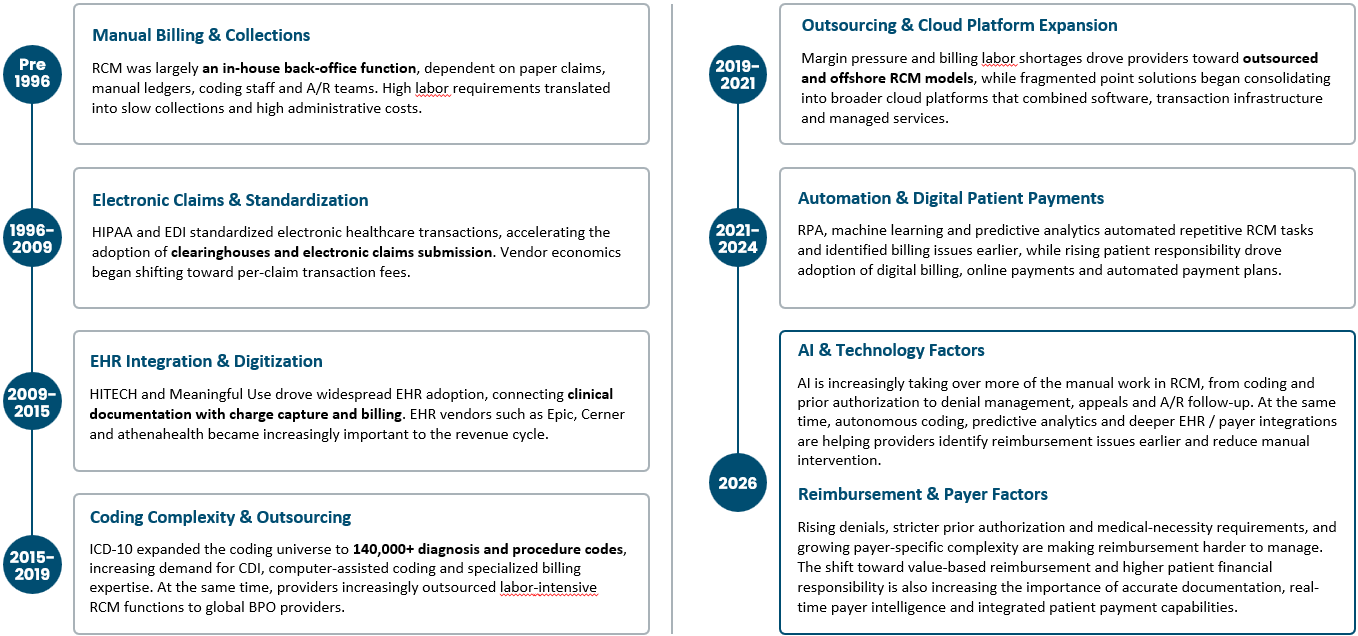
Evolution of RCM
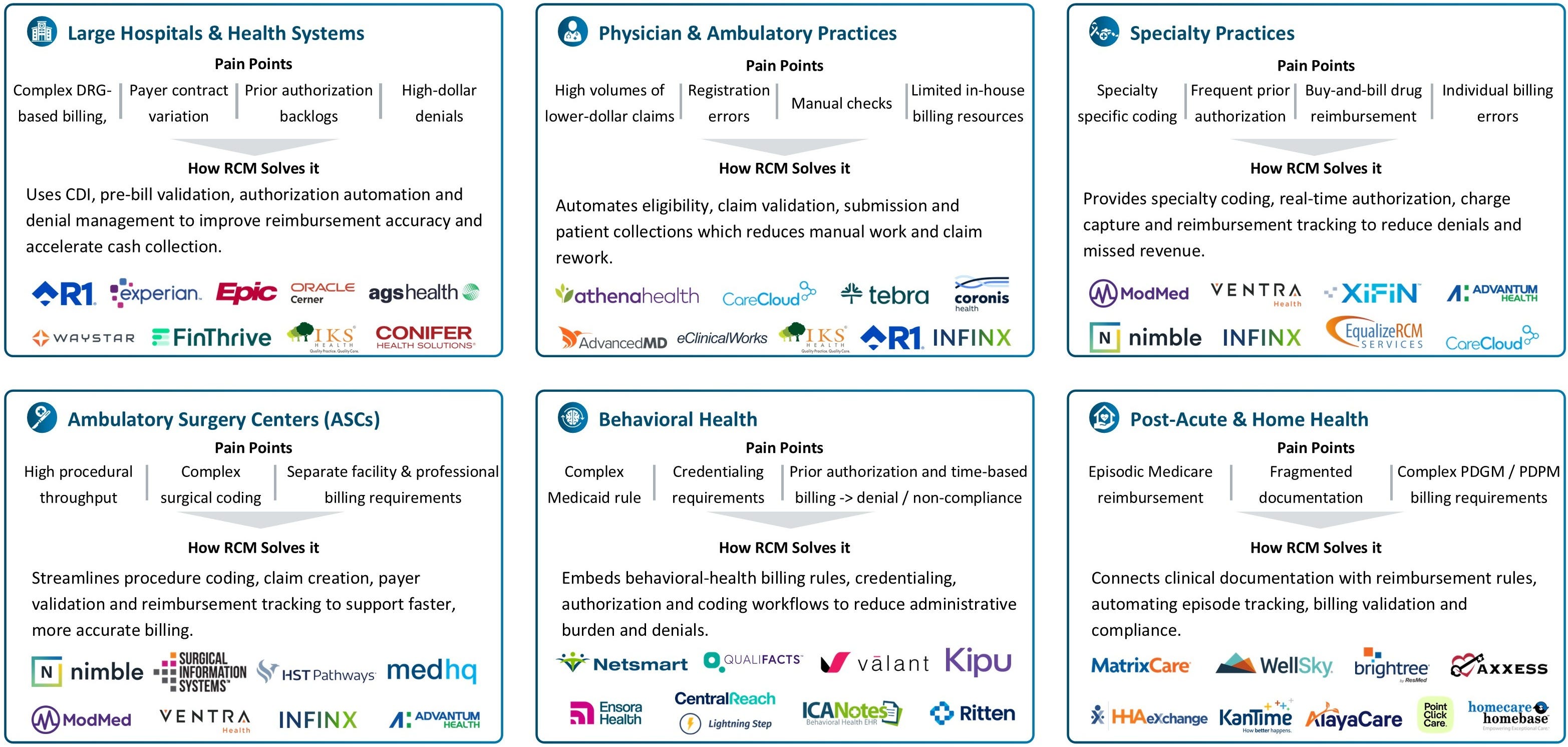
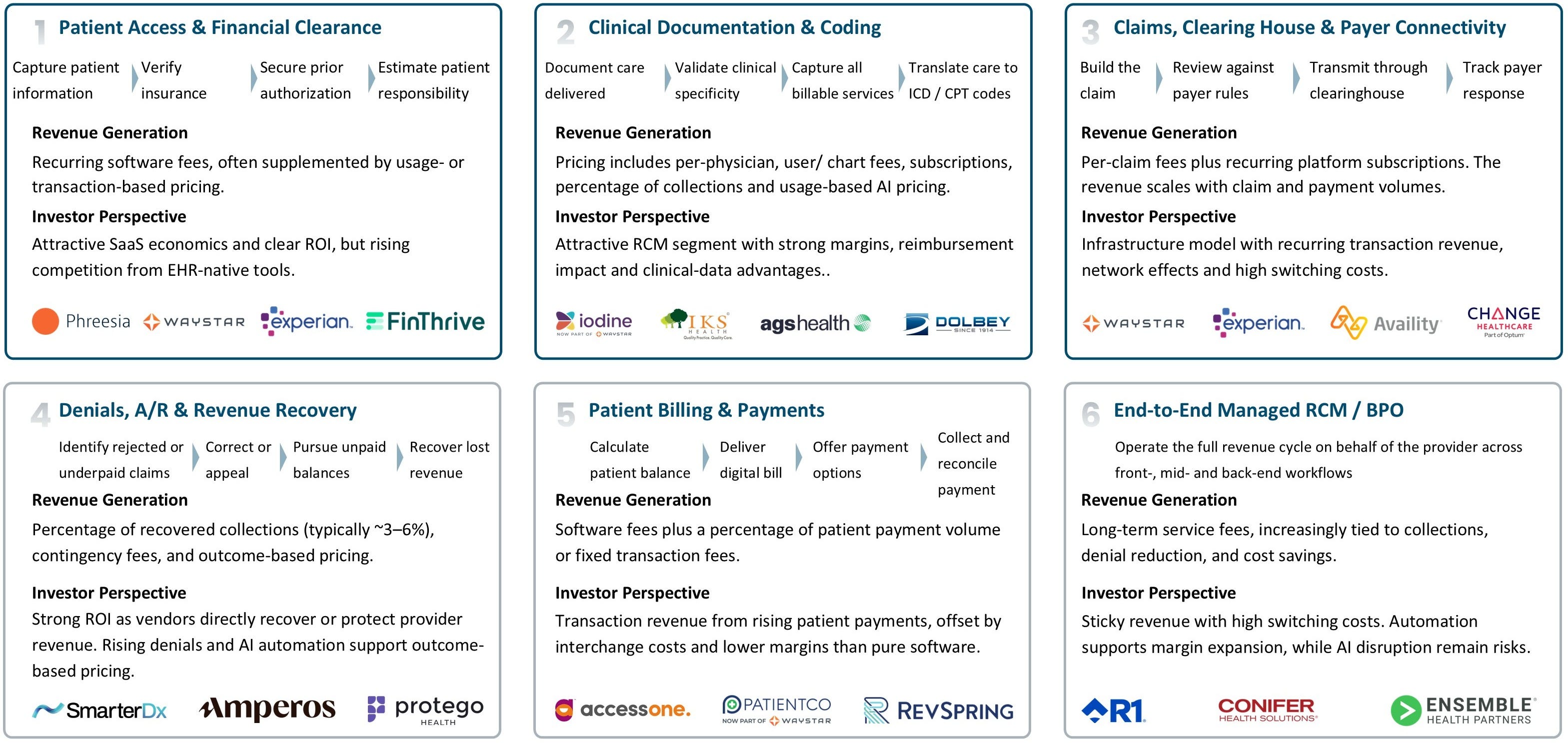
RCM Market Segments
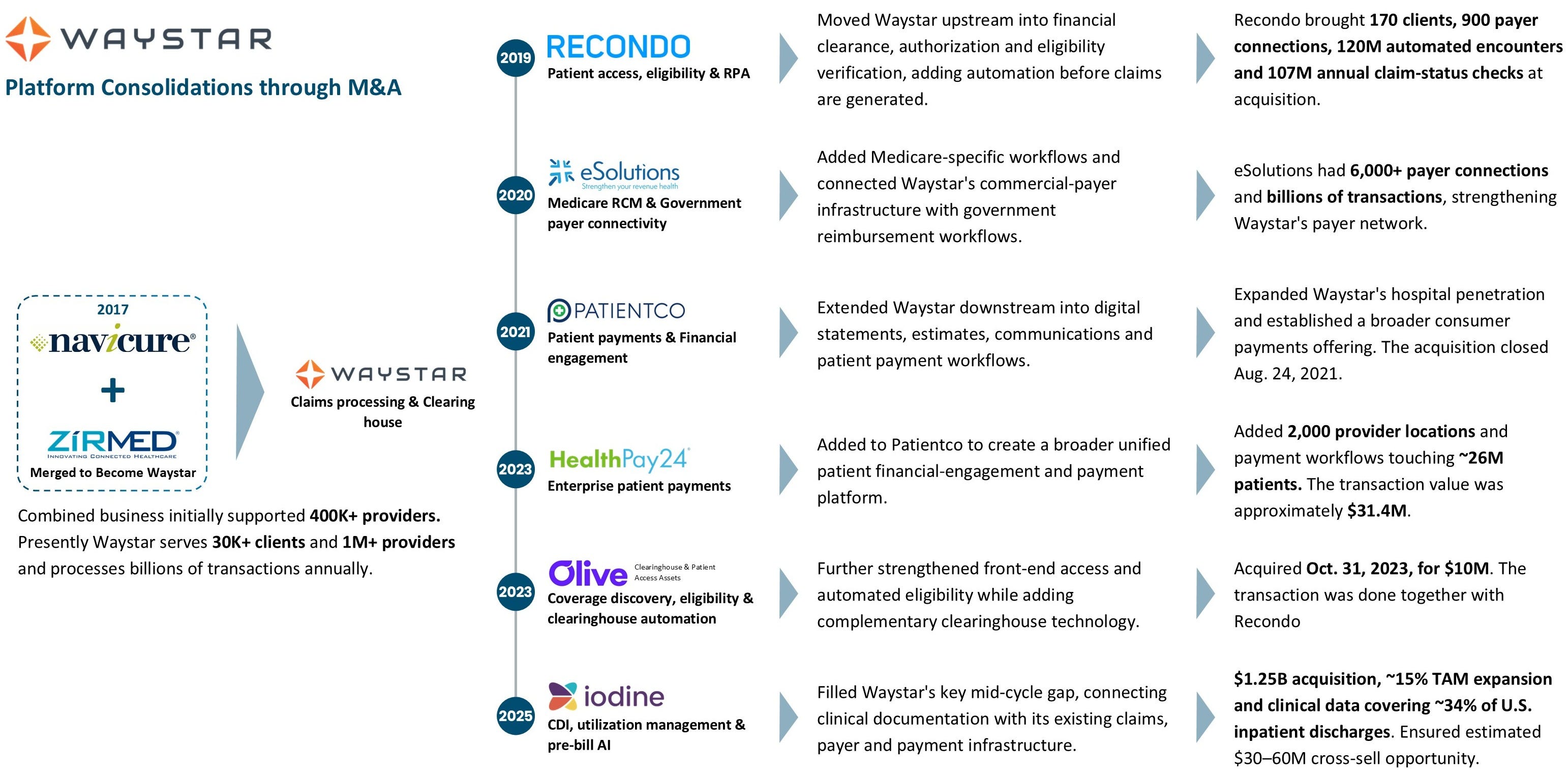
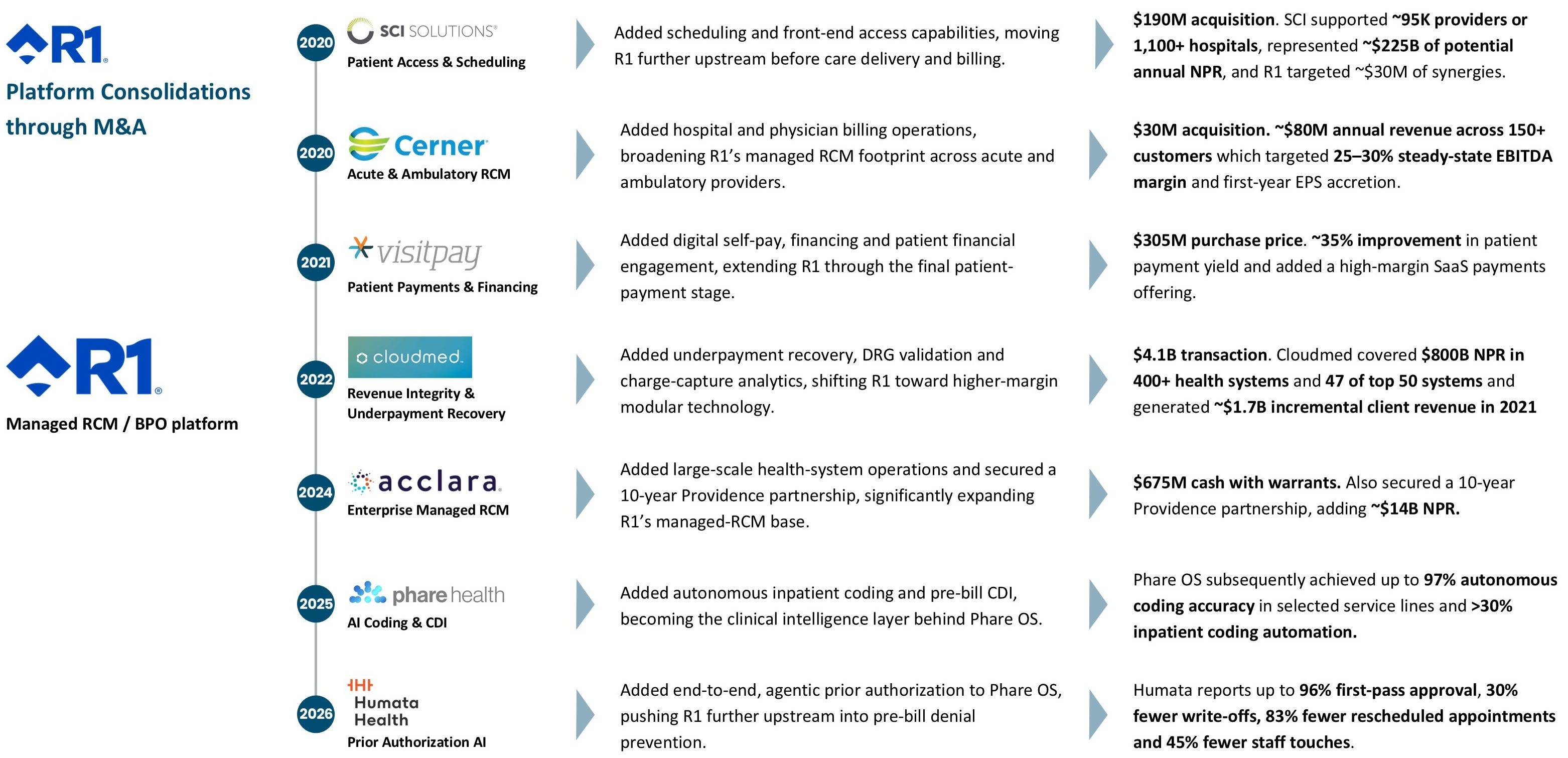
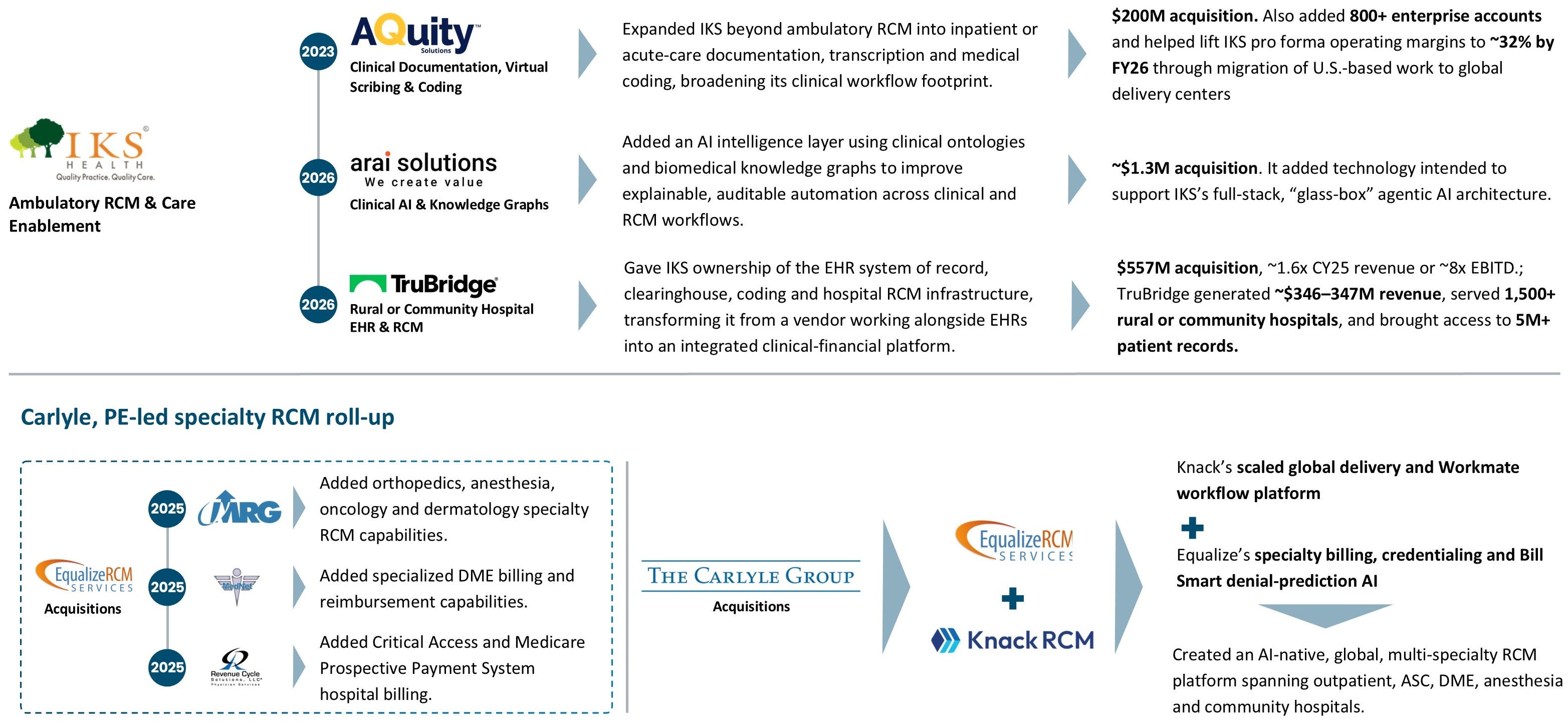
RCM Platform Consolidations
RCM Revenue Models & Investor Attractiveness Across the Workflow
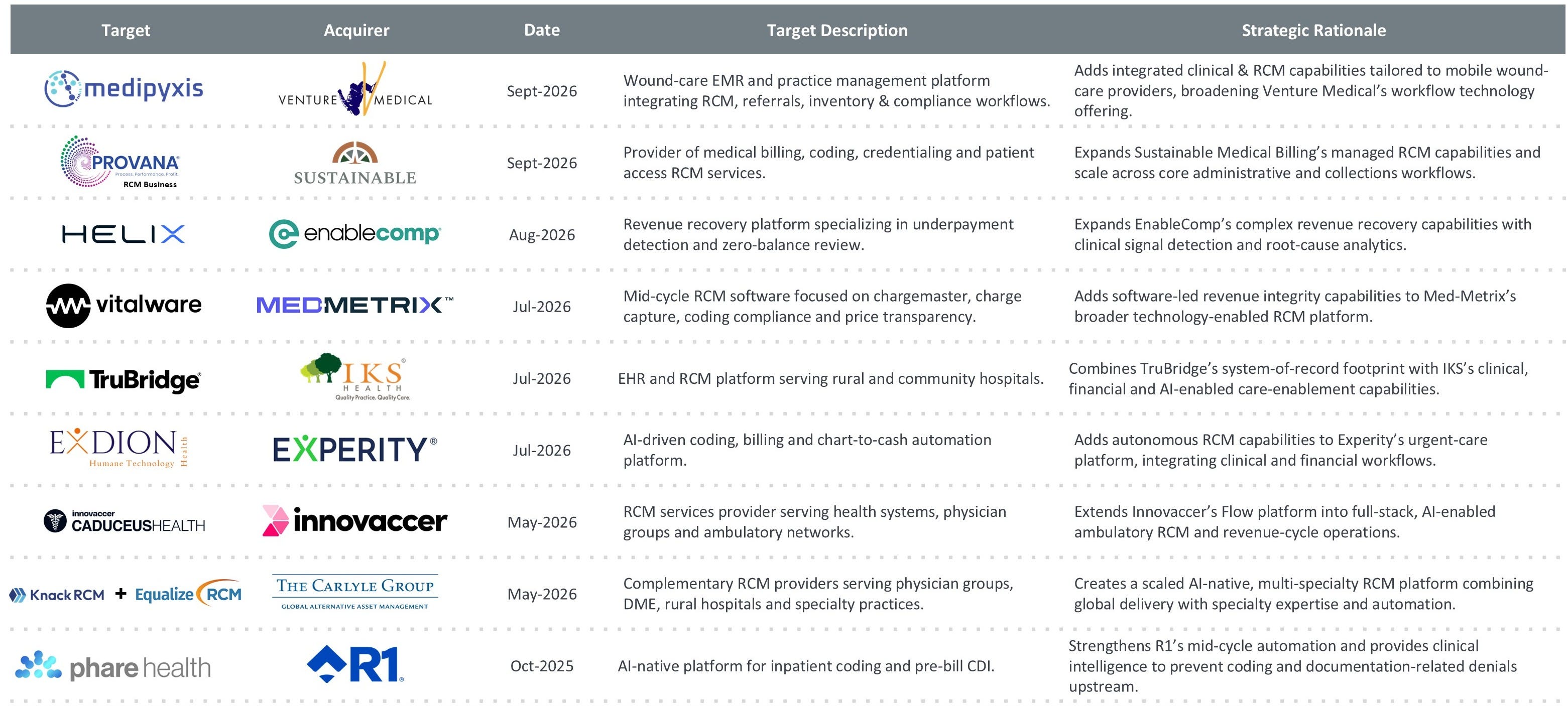
M&A Transactions in Past 12 Months
See the Full Report Below:
