The MedTech market continues to improve, but capital and strategic activity remain increasingly concentrated around differentiated, scalable platforms. Strategic and private equity buyers are taking advantage of more attractive valuation levels, while venture investors are directing larger checks toward companies capable of reaching meaningful clinical and commercial milestones with fewer financing rounds. At the same time, GLP-1 adoption, AI-enabled imaging, structural heart innovation, integrated surgical technologies, and changing commercialization models are reshaping where growth opportunities are emerging across the sector.
Market Summary
M&A conditions remain favorable for strategic and financial buyers: MedTech assets continue to trade near the lower end of historical valuation ranges, creating a more attractive acquisition environment. Strategic tuck-ins, portfolio repositioning, and private equity transactions remain important components of activity, while lower interest rates, strong large-cap balance sheets, and secular growth themes could support higher transaction volumes through 2026. MedTech deal value reached approximately $73 billion in 2025, versus approximately $41 billion in 2024.
Venture capital remains concentrated in higher-quality platforms: Later-stage and clinically de-risked companies continue attracting substantial financing, while early-stage capital remains more constrained. Seed and Series A rounds are increasingly milestone-driven, with investors requiring earlier validation across clinical evidence, reimbursement, and commercialization before committing additional capital.
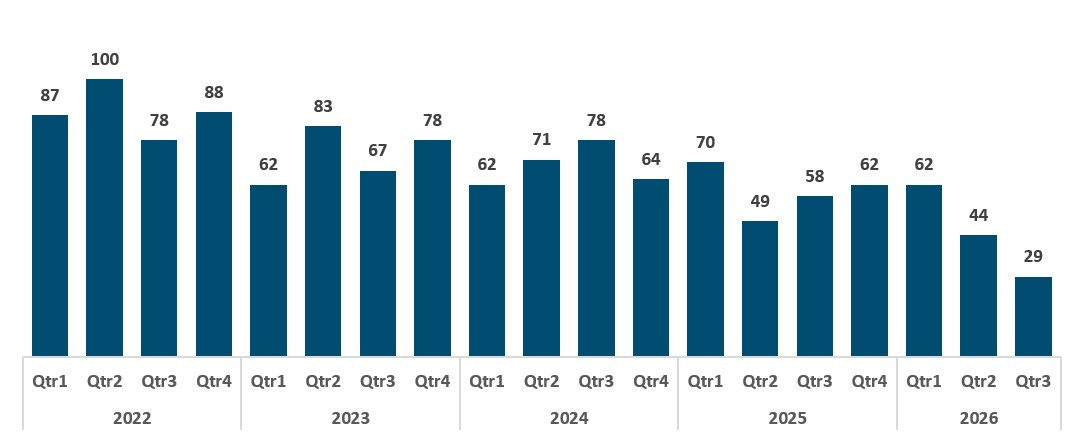
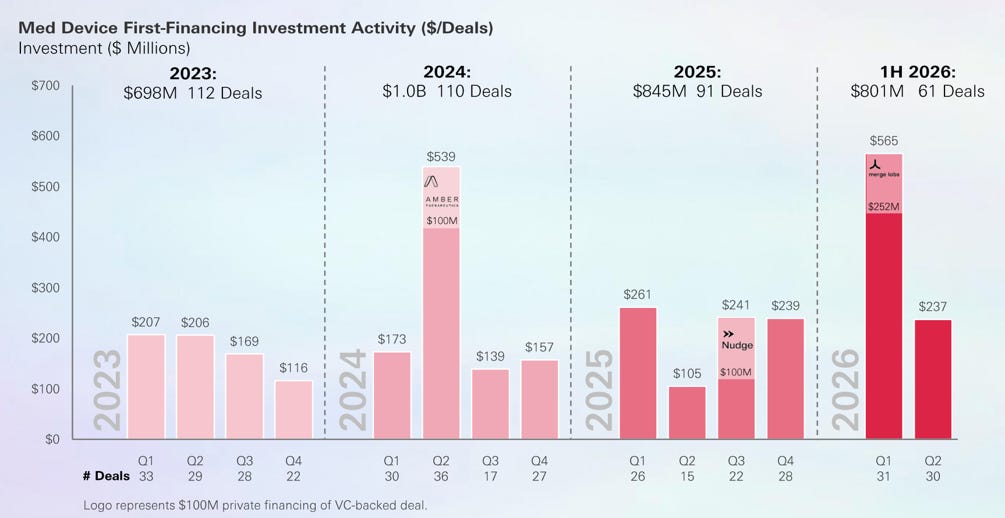
Early-stage financing is nevertheless showing signs of recovery: First-financing investment reached $801 million across 61 transactions during the first half of 2026, putting the market on pace to exceed $1.6 billion for the year. Investors are increasingly making larger initial investments that provide companies sufficient runway to reach meaningful clinical and commercial milestones before returning to market.
GLP-1 adoption is creating both disruption and new MedTech opportunities: Rapid adoption of metabolic therapies is changing treatment pathways across diabetes and aesthetics. While certain traditional device categories may face pressure, opportunities are emerging in continuous glucose monitoring, insulin delivery, metabolic monitoring, and procedures addressing post-weight-loss skin laxity and body contouring.
Procedural technologies are becoming increasingly integrated: Manufacturers are combining visualization, tissue removal, ablation, navigation, and other capabilities into consolidated systems that simplify procedural workflows. At the same time, infection-control and efficiency considerations are increasing adoption of disposable technologies, including single-use endoscopes and catheter-based imaging devices.
Advanced imaging is becoming central to procedural innovation: Real-time 4D imaging, AI-enabled visualization, automated measurements, and software-based image optimization are improving anatomical assessment and procedural guidance. These technologies are particularly relevant across cardiovascular intervention, where better visualization can also reduce dependence on fluoroscopy and physician radiation exposure.
Commercialization and distribution are becoming strategic differentiators: MedTech companies are placing greater emphasis on specialized distribution networks and alternative commercial models as they expand geographically and navigate hospital procurement and pricing pressure. Technology differentiation alone is increasingly insufficient without the infrastructure required to support physician training, clinical adoption, and sustained market penetration.
MedTech Market Activity
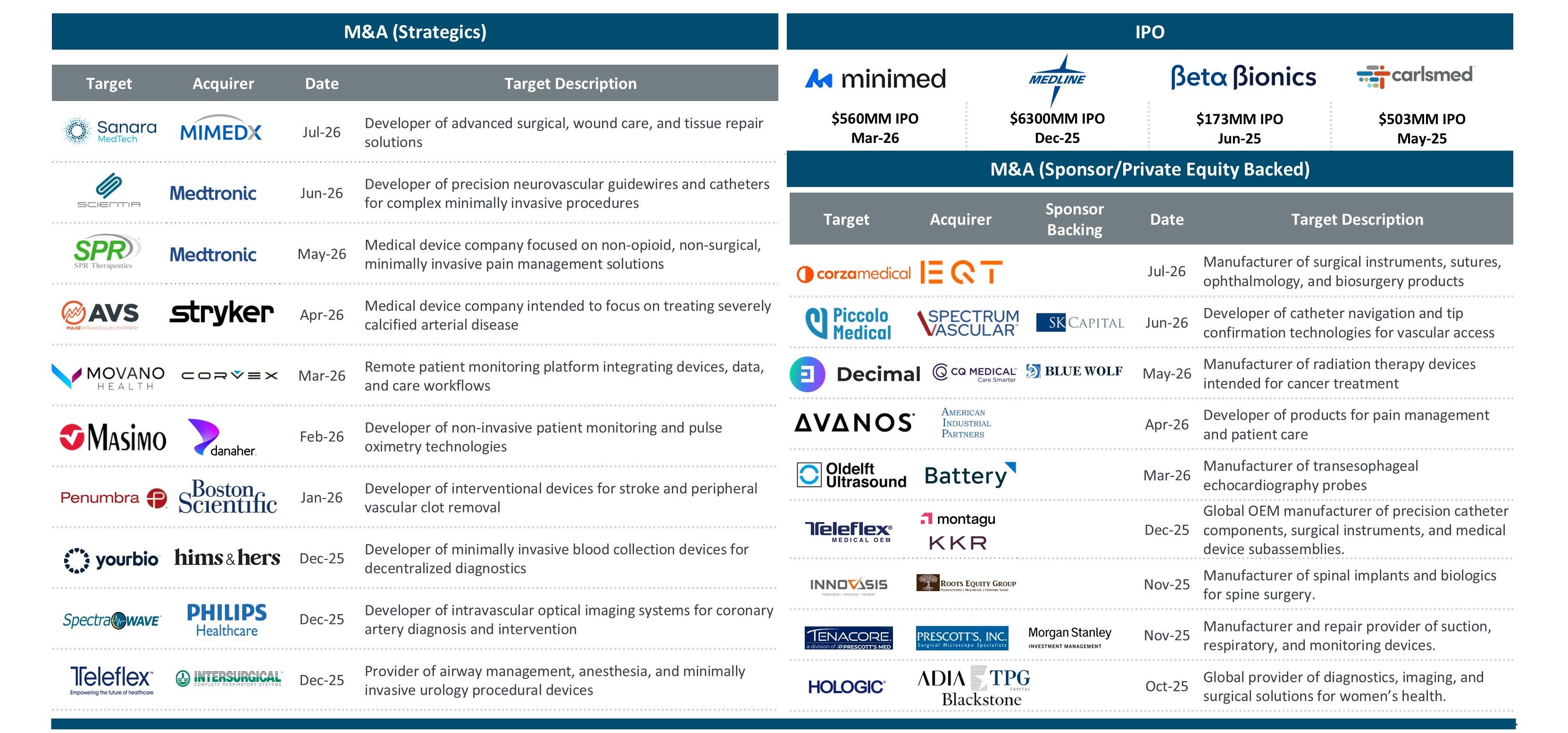
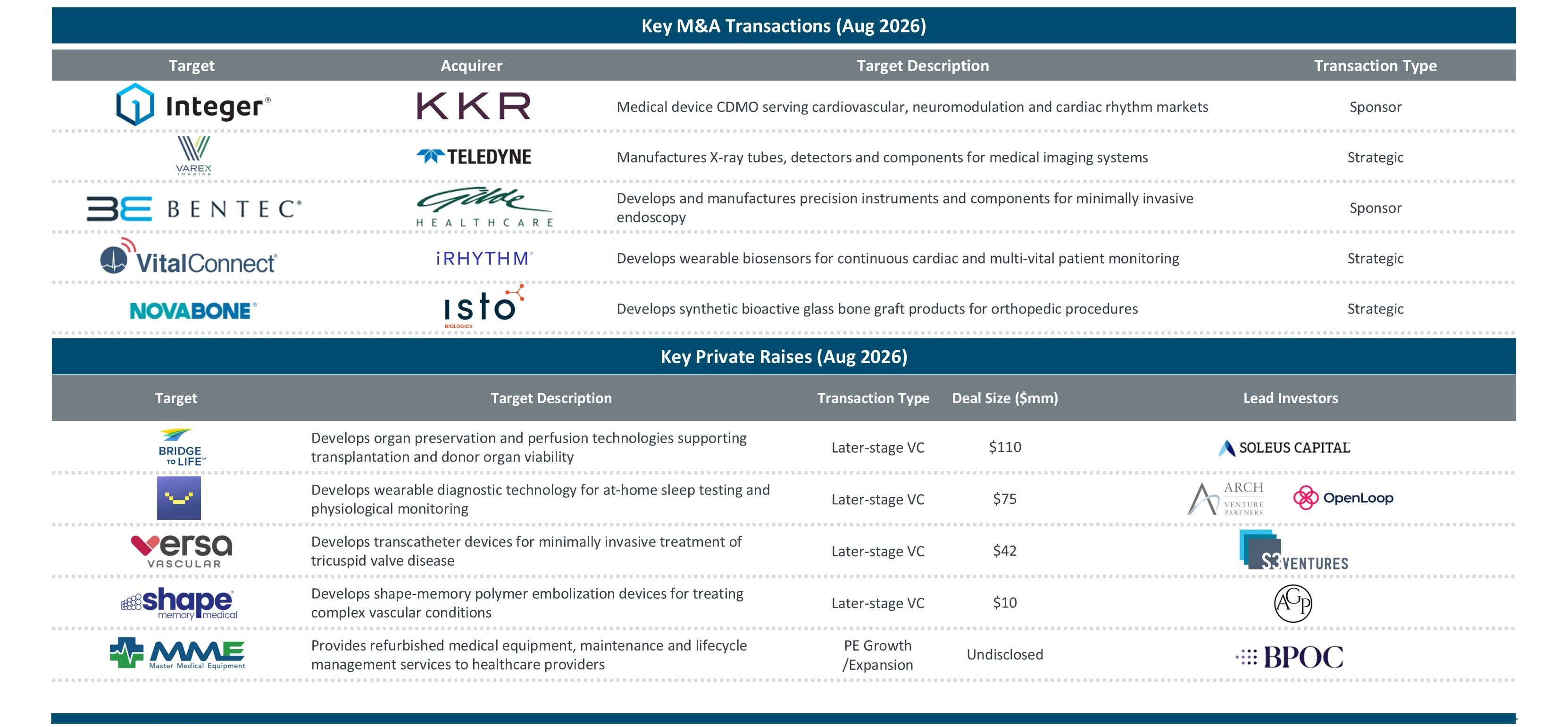
August transaction activity illustrates continued strategic and private equity interest across medical device manufacturing, imaging, endoscopy, wearable monitoring, orthopedics, cardiovascular devices, and organ transplantation technologies.
Notable M&A transactions included KKR’s acquisition of Integer, a medical device CDMO serving cardiovascular, neuromodulation, and cardiac rhythm markets; Teledyne’s acquisition of Varex Imaging, adding X-ray tubes, detectors, and imaging components; acquisitions involving BENTEC Endoscopy, VitalConnect, and NovaBone; and continued sponsor interest in specialized MedTech manufacturing businesses.
Private financings were similarly concentrated in differentiated later-stage platforms. August activity included a $110 million financing for Bridge to Life, which develops organ preservation and perfusion technologies; a $75 million financing for wearable diagnostic and physiological monitoring technology; a $42 million financing for a transcatheter tricuspid valve platform; and a $10 million financing for Shape Memory Medical’s embolization technology. Growth capital was also invested in medical-equipment lifecycle and service businesses.
The mix reinforces a broader theme across the market: investors are willing to deploy meaningful capital when technologies address established clinical needs and provide a credible path toward commercialization, strategic relevance, or an eventual exit.
Four Core MedTech Themes
Metabolic Care and the GLP-1 Ecosystem
GLP-1 therapies are increasingly influencing MedTech demand well beyond traditional diabetes care. Rapid adoption is changing treatment patterns while increasing the importance of technologies that monitor patients, optimize drug therapy, and address downstream effects of significant weight loss.
Continuous glucose monitoring remains particularly relevant as metabolic treatment regimens become increasingly complex. CGMs can support therapy optimization and dose titration, while connected monitoring platforms create opportunities to integrate drug therapy with longitudinal patient data.
A second opportunity is emerging within aesthetics. As rapid pharmacological weight loss reduces demand for some fat-reduction treatments, patient demand may shift toward skin tightening, body contouring, and surgical lift procedures. The result is less a disappearance of MedTech demand than a reallocation toward technologies addressing the consequences of large-scale weight loss.
Integrated Procedural Platforms and Structural Heart
Procedure-focused MedTech is increasingly moving from individual devices toward integrated technology platforms. Manufacturers are combining imaging, visualization, tissue removal, ablation, and other capabilities to streamline physician workflows and improve procedural efficiency.
Structural heart remains an important innovation category within this broader trend. New mitral and tricuspid repair and replacement technologies continue expanding minimally invasive treatment options for patients with complex structural heart disease. August financing activity reinforces this interest, with a transcatheter tricuspid valve company raising approximately $42 million.
Disposable procedural technologies are also gaining traction. Infection-control requirements and workflow considerations are supporting adoption of single-use endoscopes and catheter-based imaging technologies, potentially shifting portions of the traditional capital-equipment and reusable-instrument market toward recurring consumable revenue models.
AI-Enabled Imaging and Procedural Visualization
Imaging is increasingly evolving from a diagnostic modality into an integrated procedural technology. Real-time 4D imaging and AI-enabled visualization can improve anatomical assessment, device guidance, procedural precision, and operating efficiency, particularly in cardiovascular intervention.
AI is simultaneously becoming embedded directly into imaging platforms through automated measurements, workflow automation, and software-based image optimization. Rather than operating as standalone software, these capabilities increasingly enhance the underlying imaging system and physician workflow.
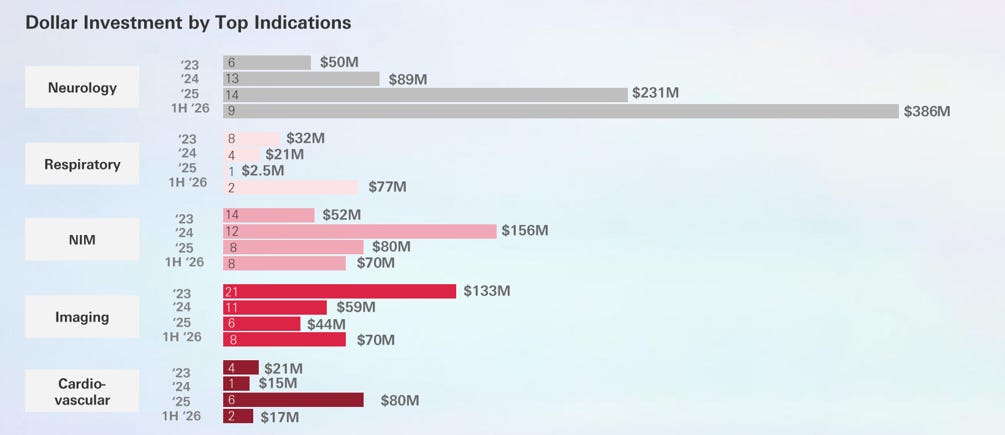
Venture activity supports the theme. Imaging attracted approximately $70 million of first-financing investment during the first half of 2026, reflecting increasing interest in AI-powered diagnostic and image-guided procedural technologies. Neurology was even larger at approximately $386 million, supported by AI-enabled brain-computer interface and neuromodulation platforms.
Capital Markets and MedTech Valuations
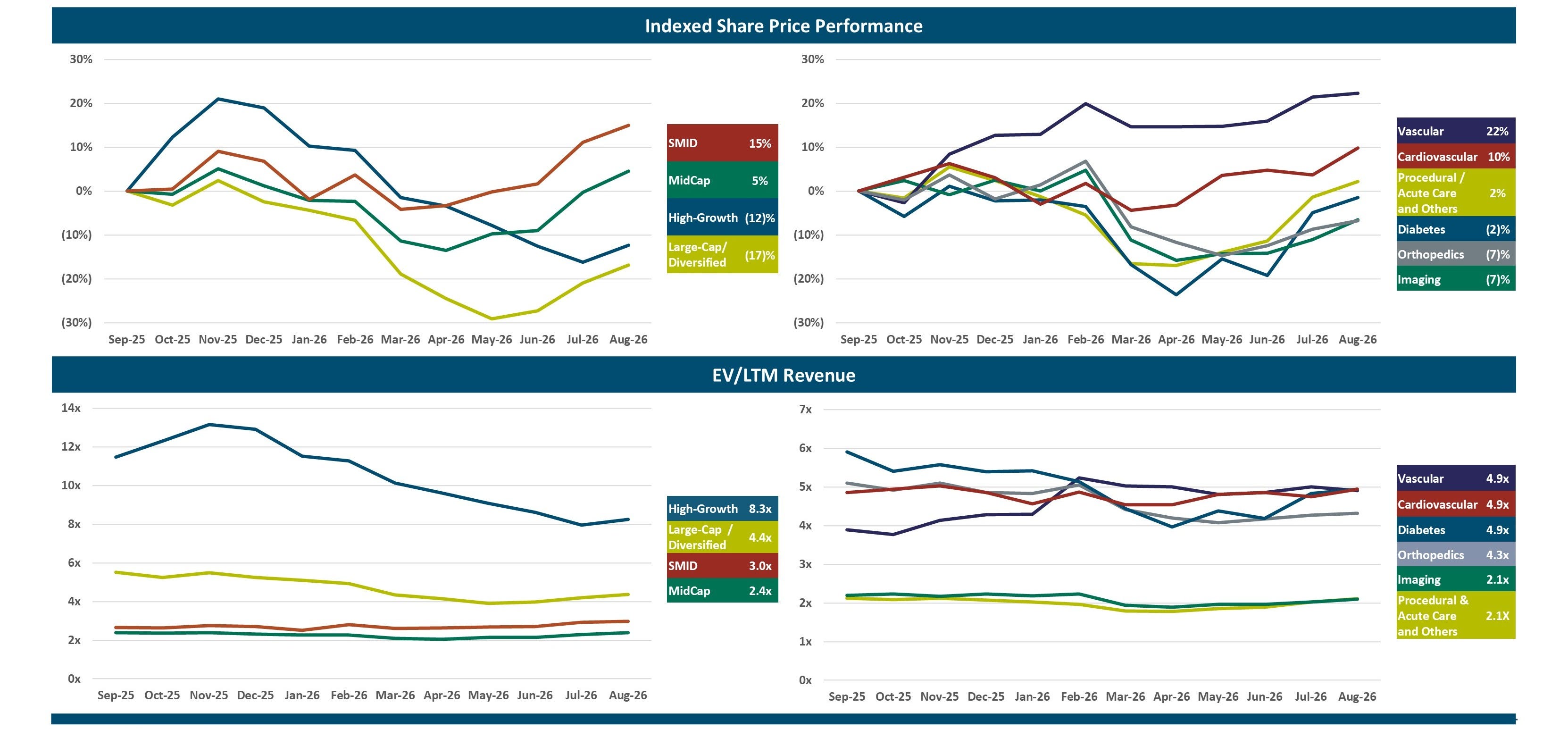
Public-market valuations continue to show substantial dispersion between high-growth MedTech companies and more mature diversified businesses. As of August 31, 2026, the report’s High-Growth MedTech cohort traded at approximately 8.3x EV/LTM revenue, compared with 4.4x for Large-Cap / Diversified companies, 3.0x for SMID companies, and 2.4x for MidCap companies.
Subsector valuations also remain differentiated. Vascular, Cardiovascular, and Diabetes companies each traded at approximately 4.9x LTM revenue, compared with 4.3x for Orthopedics and approximately 2.1x for Imaging and Procedural / Acute Care companies.
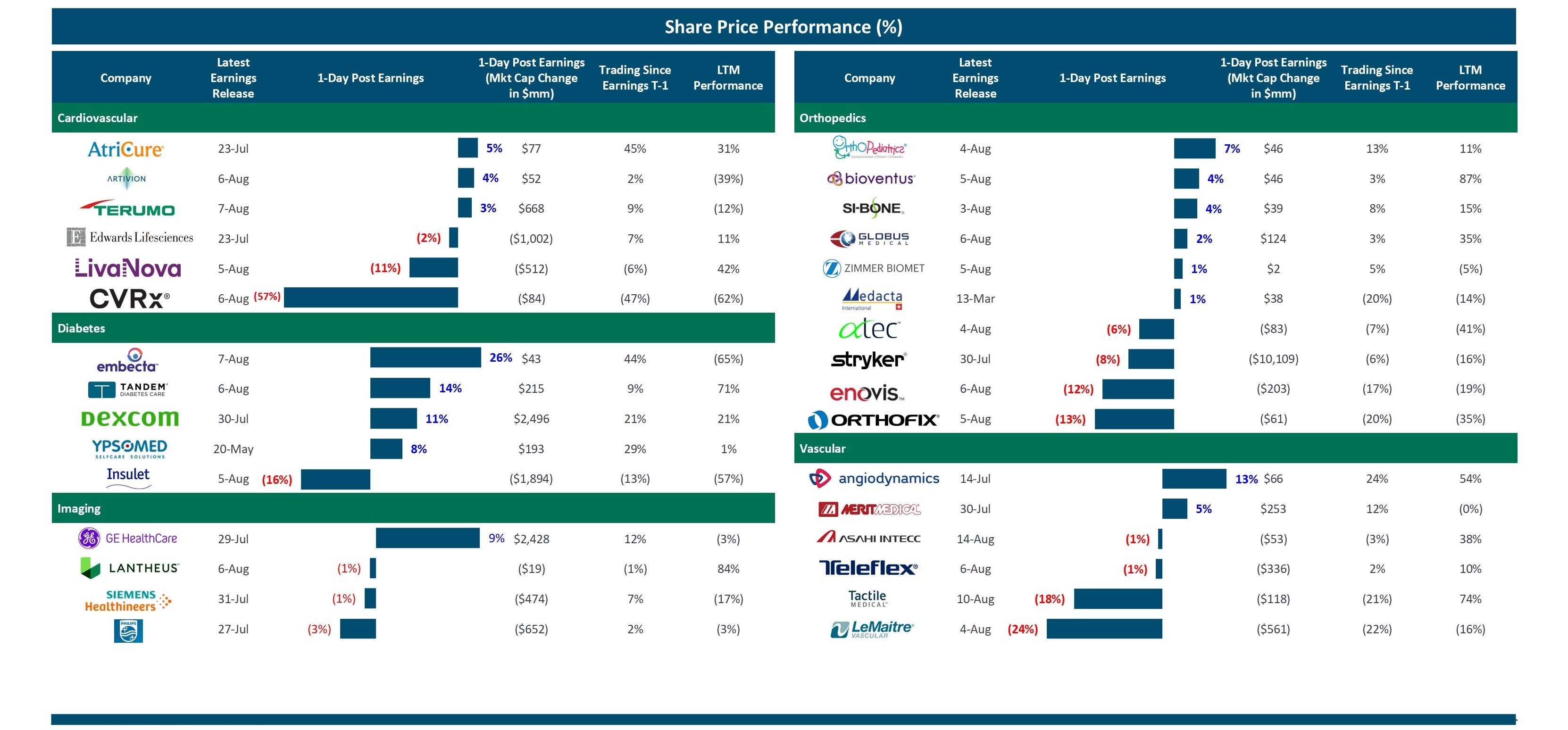
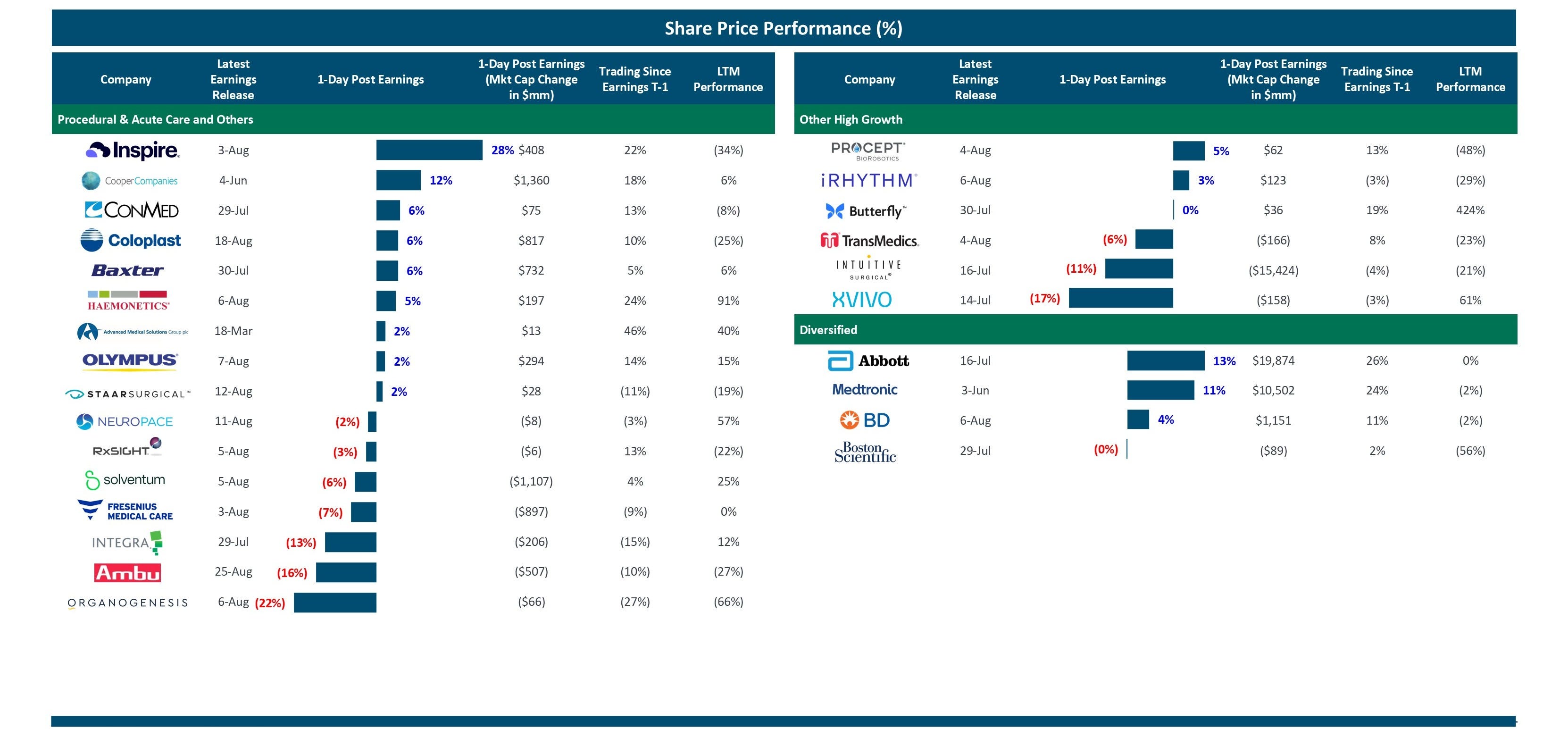
Performance has been equally polarized. Over the twelve months through August, Vascular was up approximately 22% and Cardiovascular approximately 10%, while High-Growth, Large-Cap / Diversified, Orthopedics, and Imaging cohorts were below their September 2025 starting levels. This divergence reinforces the importance of company-specific growth, earnings execution, and clinical differentiation rather than broad-based sector multiple expansion.
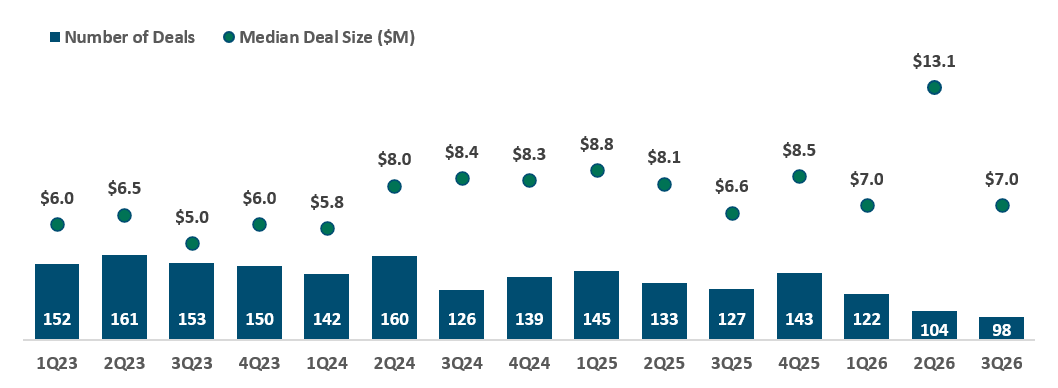
The private market shows a similar pattern. Improving financing volumes have not translated into indiscriminate risk appetite. Investors continue to favor platforms with strong clinical evidence, defined reimbursement pathways, and clear commercialization strategies, with larger syndicates and milestone-based structures increasingly used to finance companies through critical value-creation events.