



Healthcare IT is entering a more disciplined phase of growth. Artificial intelligence remains the sector’s most visible catalyst, but adoption and investment are increasingly tied to practical outcomes: reducing administrative work, improving clinical productivity, strengthening revenue collection and delivering measurable returns for providers and payers. At the same time, interoperability, cybersecurity, value-based reimbursement and platform consolidation are reshaping how healthcare organizations evaluate technology vendors.
Investment Activity Is Recovering, but Capital Remains Concentrated
M&A activity continues to be driven by strategic buyers and private equity firms seeking broader, end-to-end platforms. Buyers are acquiring point solutions to expand capabilities, enter adjacent markets and accelerate product development, particularly across clinical workflows, revenue cycle management, patient engagement and administrative automation. More disciplined valuations and improved financing conditions are also creating attractive entry points for well-capitalized acquirers.
Venture funding has similarly begun to recover, with U.S. digital health companies raising $7.4 billion during the first half of 2026, compared with $6.4 billion in the first half of 2025. However, the rebound remains highly selective: approximately 45% of H1 2026 funding came from rounds exceeding $100 million. Investors are concentrating capital in companies with commercial traction, clinical validation, defensible technology and a clear ability to demonstrate financial or operational ROI.
Public Markets Continue to Differentiate Between Business Models

Public HCIT performance remains uneven. Over the last 12 months, pharma services companies led the report’s sector indices with a 25% increase, supported by improving biotech funding, greater R&D activity and sustained outsourcing demand. EHR, revenue cycle management and diversified HCIT companies gained approximately 14%, while benefits and telehealth companies rose 9%. Value-based care declined 4%, reflecting continued pressure from medical costs and reimbursement uncertainty.
Valuations also highlight the market’s preference for recurring, high-margin software models. EHR and RCM companies traded at approximately 8.1x LTM revenue, compared with 4.6x for pharma services, 3.3x for benefits and telehealth, and 0.72x for value-based care. The valuation gap reflects differences in revenue predictability, gross margins, capital intensity and exposure to medical-cost risk.

Three Segments Are Defining the Next Phase of HCIT
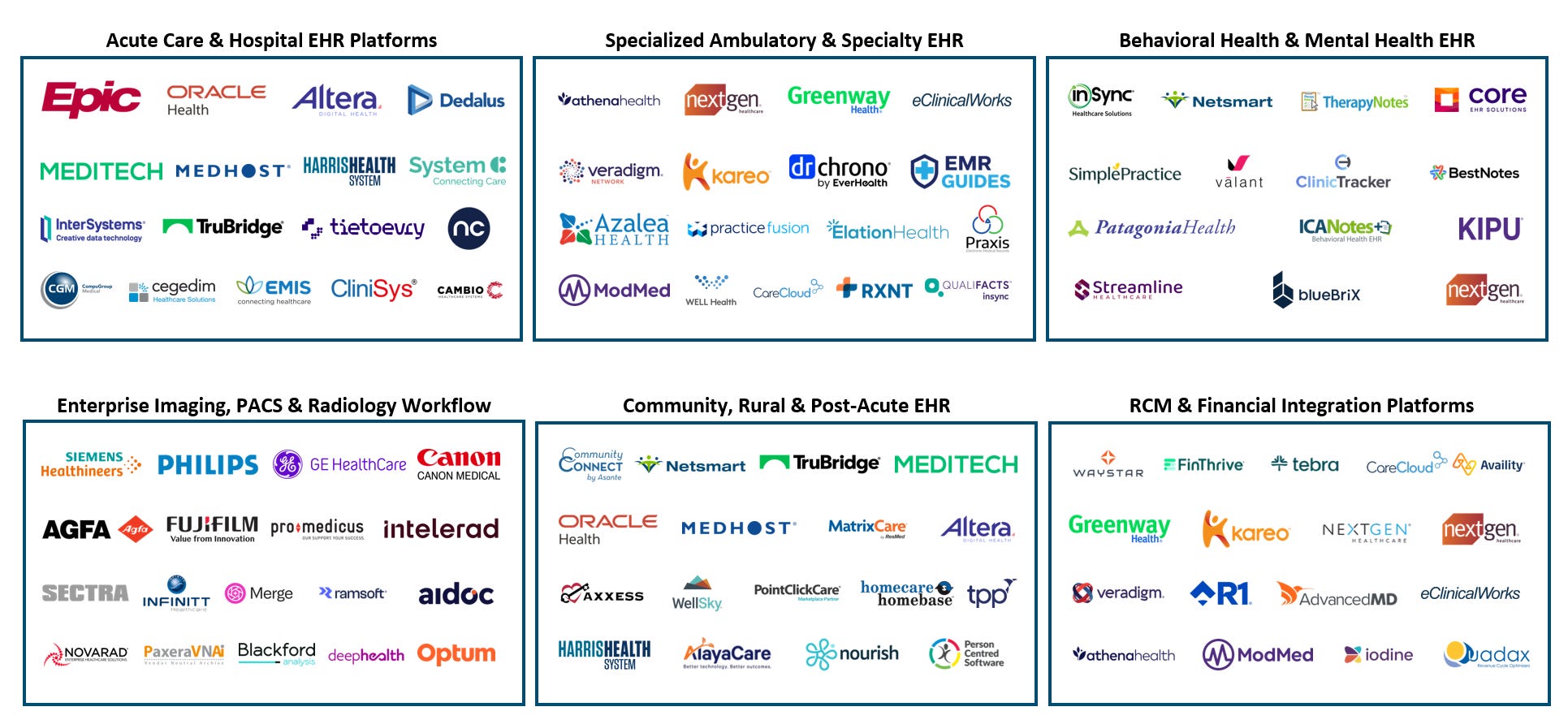
EHR and PACS platforms are evolving from systems of record into AI-enabled clinical infrastructure. Interoperability mandates, cloud migration, ambient documentation, diagnostic AI and integrated revenue cycle capabilities are expanding the strategic role of these platforms. At the same time, high switching costs and workflow disruption continue to protect established vendors, while hospitals increasingly scrutinize new investments based on total cost of ownership, compliance and margin impact.
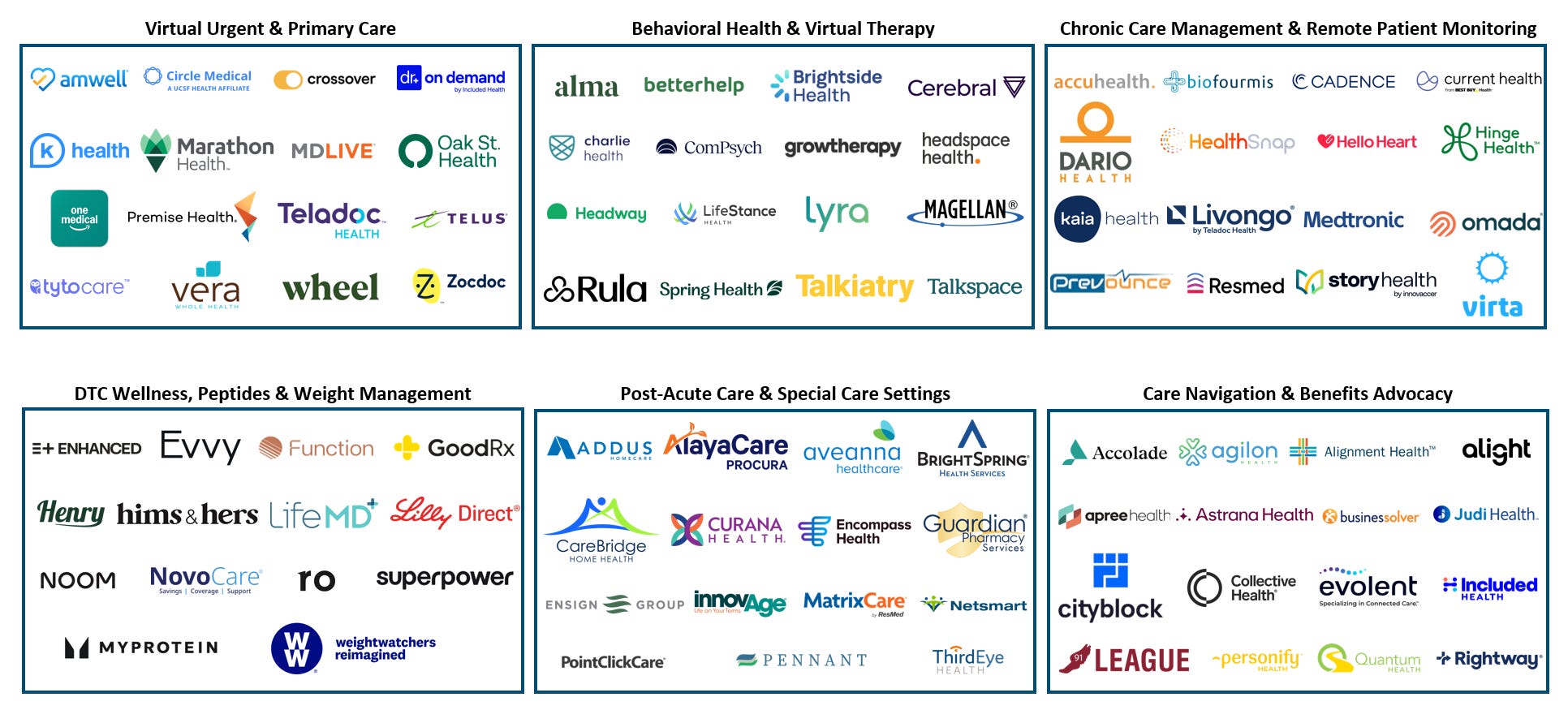
Telehealth and virtual care are moving beyond basic video consultations toward more integrated models covering behavioral health, chronic care, remote patient monitoring, specialty care and benefits navigation. Growth is supported by clinician shortages, an aging population and the continued movement of care into the home. However, vendors must increasingly prove cost savings, clinical outcomes and sustained patient engagement rather than relying solely on convenience or access.
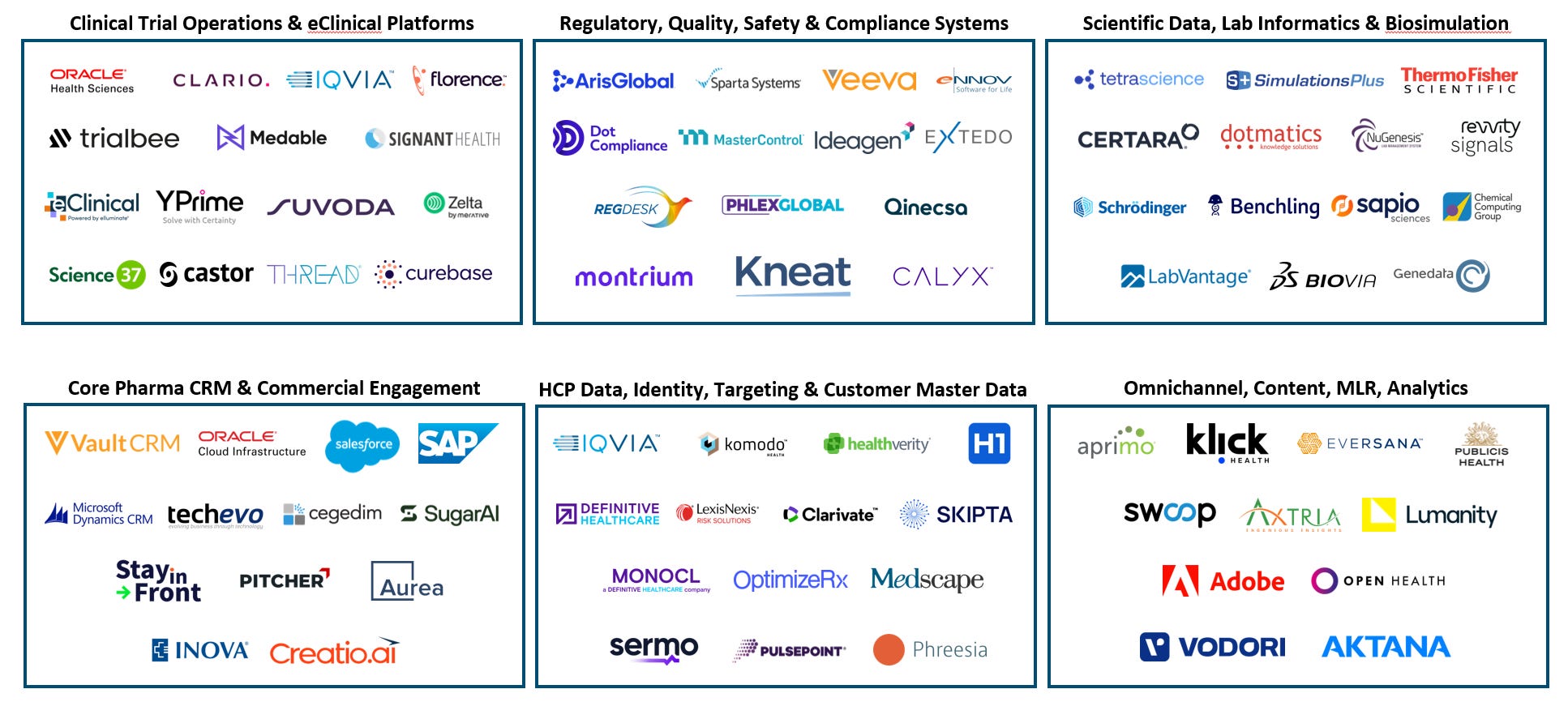
Life sciences technology and pharma CRM are being transformed by AI, omnichannel engagement and growing pressure to improve R&D productivity. Commercial platforms are evolving from basic customer databases into intelligent engagement systems that integrate HCP data, prescribing activity, real-world evidence and next-best-action recommendations. Across R&D, demand is rising for eClinical systems, regulatory automation, lab informatics, biosimulation and AI-enabled documentation platforms that can reduce development timelines and improve compliance.
Please open the full report below: