



Healthcare IT is moving beyond standalone software toward integrated platforms that control critical clinical, administrative, and commercial workflows. The market increasingly rewards solutions that reduce labor, improve collections, support compliance, and sit directly inside existing systems rather than adding another disconnected tool.
Key Market Themes
M&A remains the primary liquidity route
Transaction activity has remained resilient, but buyers are selective and increasingly focused on RCM, clinical infrastructure, data platforms, and workflow automation. Private equity is targeting scaled control investments, while strategic buyers are using tuck-ins to add AI, diagnostics, and adjacent capabilities.
Venture capital is concentrating around category leaders
Funding has not broadly recovered; capital is rotating toward fewer, higher-conviction companies. Just over 8% of deals captured 45% of invested capital, widening the gap between scaled platforms and subscale vendors.
AI alone is no longer enough
Premium capital is moving toward companies that combine AI with healthcare expertise, proprietary workflow context, deep integrations, and defensible distribution. Buyers increasingly expect measurable financial outcomes rather than broad productivity claims.
Public Market Overview - Last 12 Months
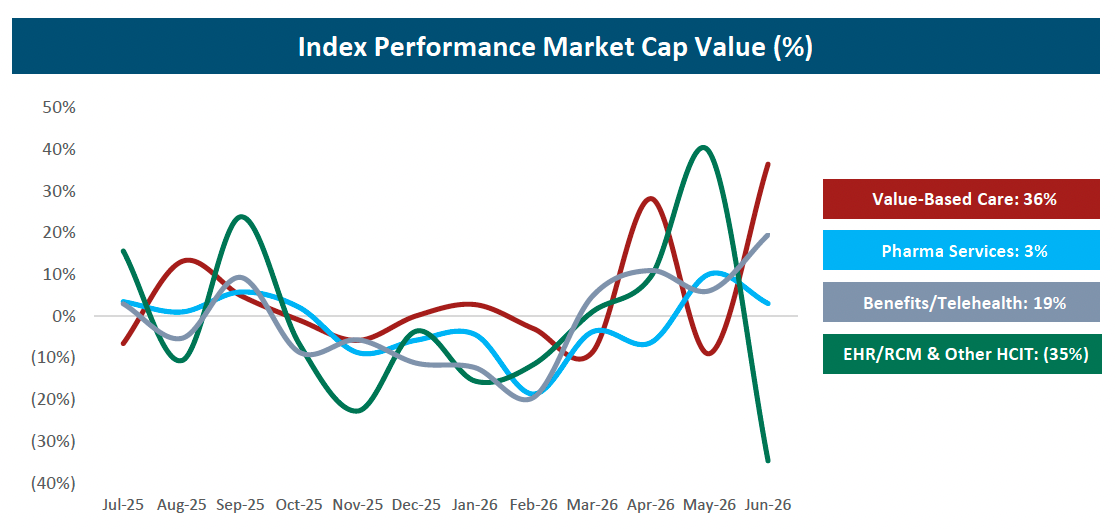
Value-Based Care leads market performance while EHR/RCM lags: Value-Based Care delivered the strongest market cap performance at +36%, reflecting investor preference for cost-containment and outcomes-driven models, while EHR/RCM & Other HCIT declined 35%, signaling continued pressure on traditional HCIT platforms.
Benefits/Telehealth commands the highest EBITDA multiple: Benefits/Telehealth trades at the highest EBITDA multiple at 78x, followed by DTC and Value-Based Care, suggesting investors continue to reward scaled platforms with earnings visibility, recurring demand, and attractive growth profiles.
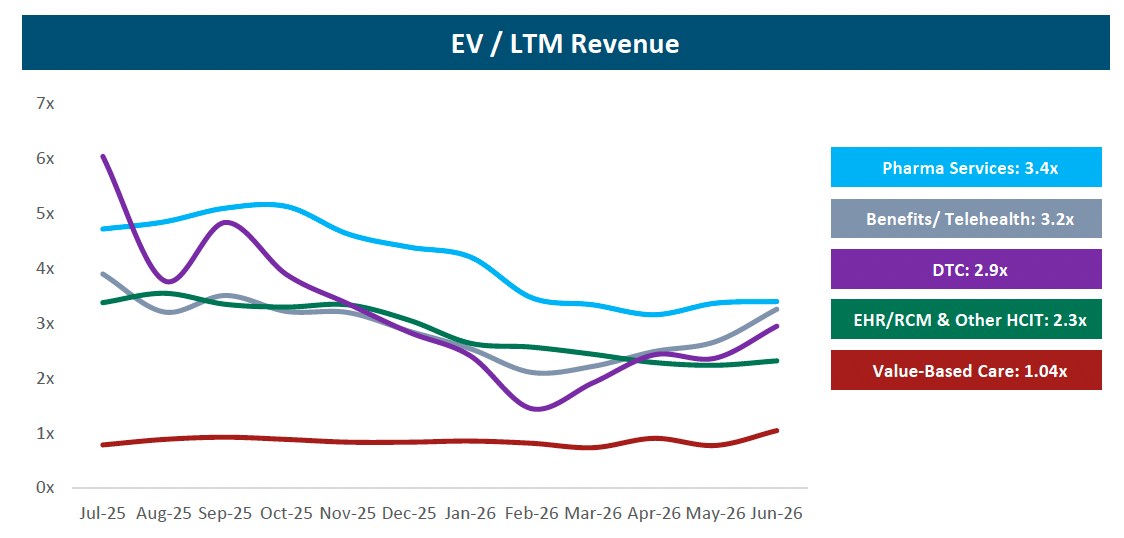
Revenue multiples remain compressed: Pharma Services is the most resilient, while Value-Based Care trades lower despite stronger share performance.
HCIT Market Niches Covered
EHR & PACS Platforms
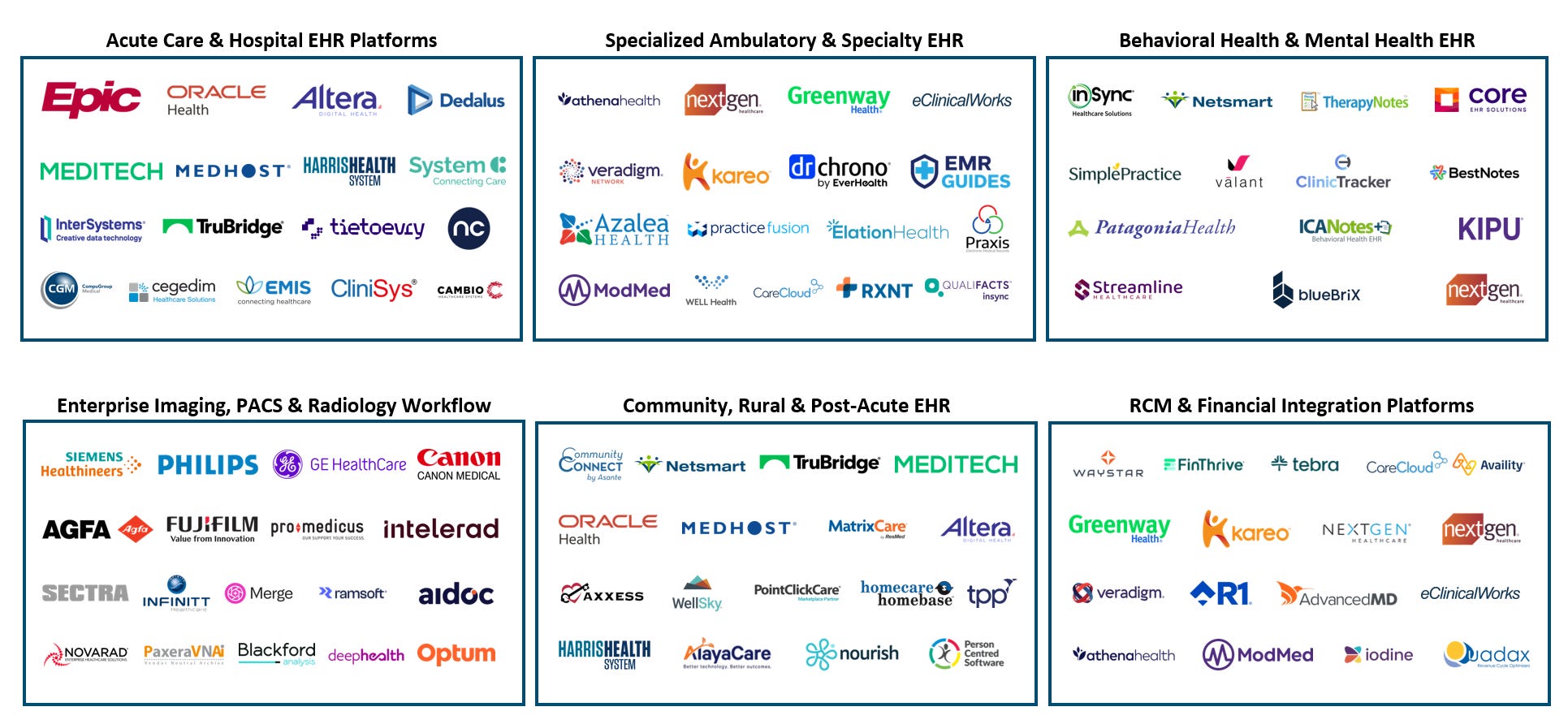
EHR and PACS platforms form the core digital infrastructure of hospitals, supporting patient records, clinical documentation, imaging, interoperability, and care coordination.
The market is shifting toward cloud-based, interoperable platforms that combine EHR, imaging, RCM, analytics, and AI-enabled decision support. Regulatory mandates, rising imaging volumes, clinician burnout, and aging populations continue to support demand, while high switching costs strengthen incumbent retention.
Commercial value increasingly depends on integration depth, workflow ownership, implementation discipline, and demonstrable improvements in staffing efficiency or financial performance. Recent M&A and venture activity shows continued appetite for enterprise imaging, clinical AI, and integrated hospital platforms.
Telehealth & Virtual Care
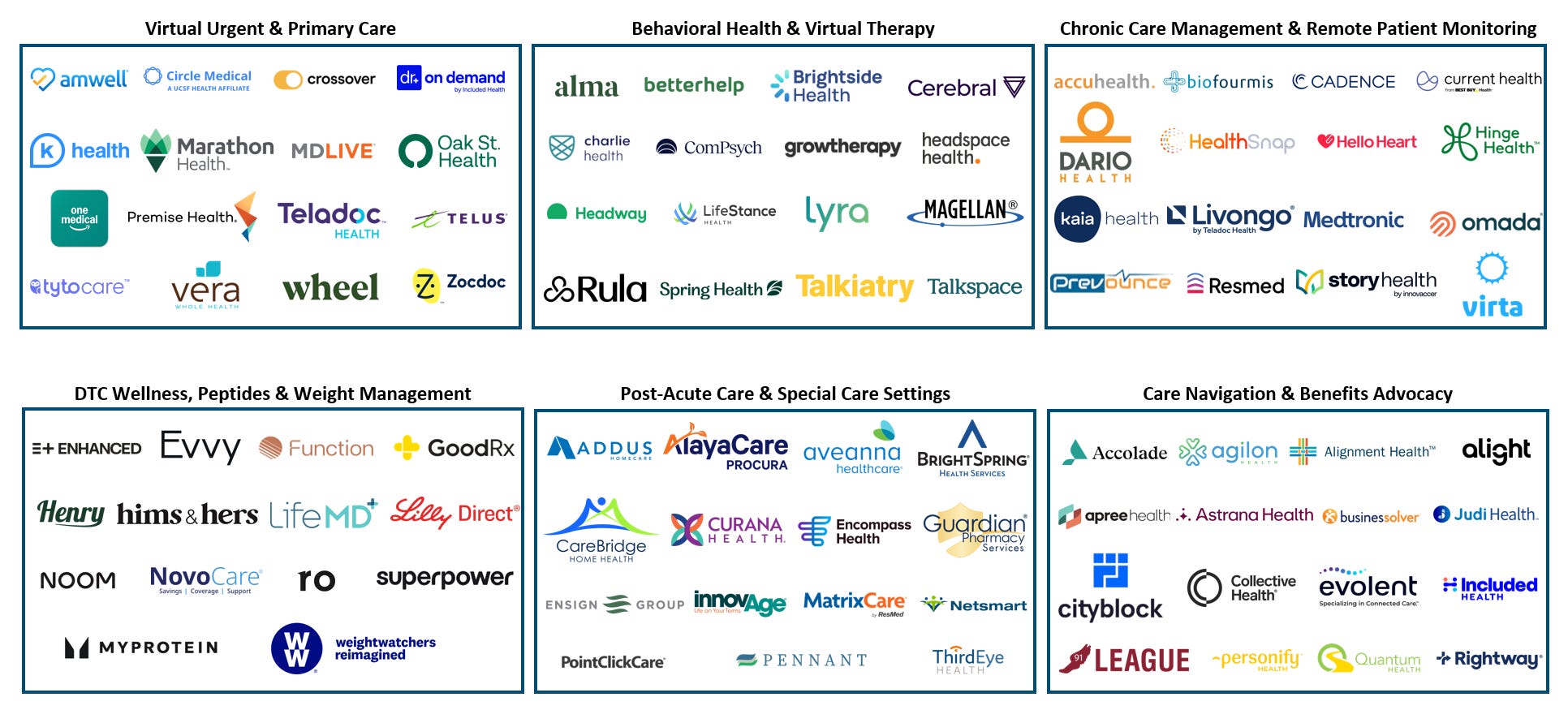
Telehealth has become a permanent part of hybrid care delivery, supporting virtual consultations, behavioral health, chronic disease management, remote monitoring, and care delivered outside traditional facilities.
Growth is moving away from commodity virtual visits toward specialty care, RPM, behavioral health, care navigation, and clinically connected weight-management models. EHR integration, employer ROI requirements, and reimbursement visibility are becoming increasingly important, while standalone DTC models face retention and regulatory pressure.
The strongest commercialization models combine clinical services, recurring contracts, measurable outcomes, and established distribution through employers, payers, providers, pharmacies, or health systems. These characteristics improve retention and make the business more attractive to both strategic acquirers and growth investors.
Life Sciences Tech & Pharma CRM
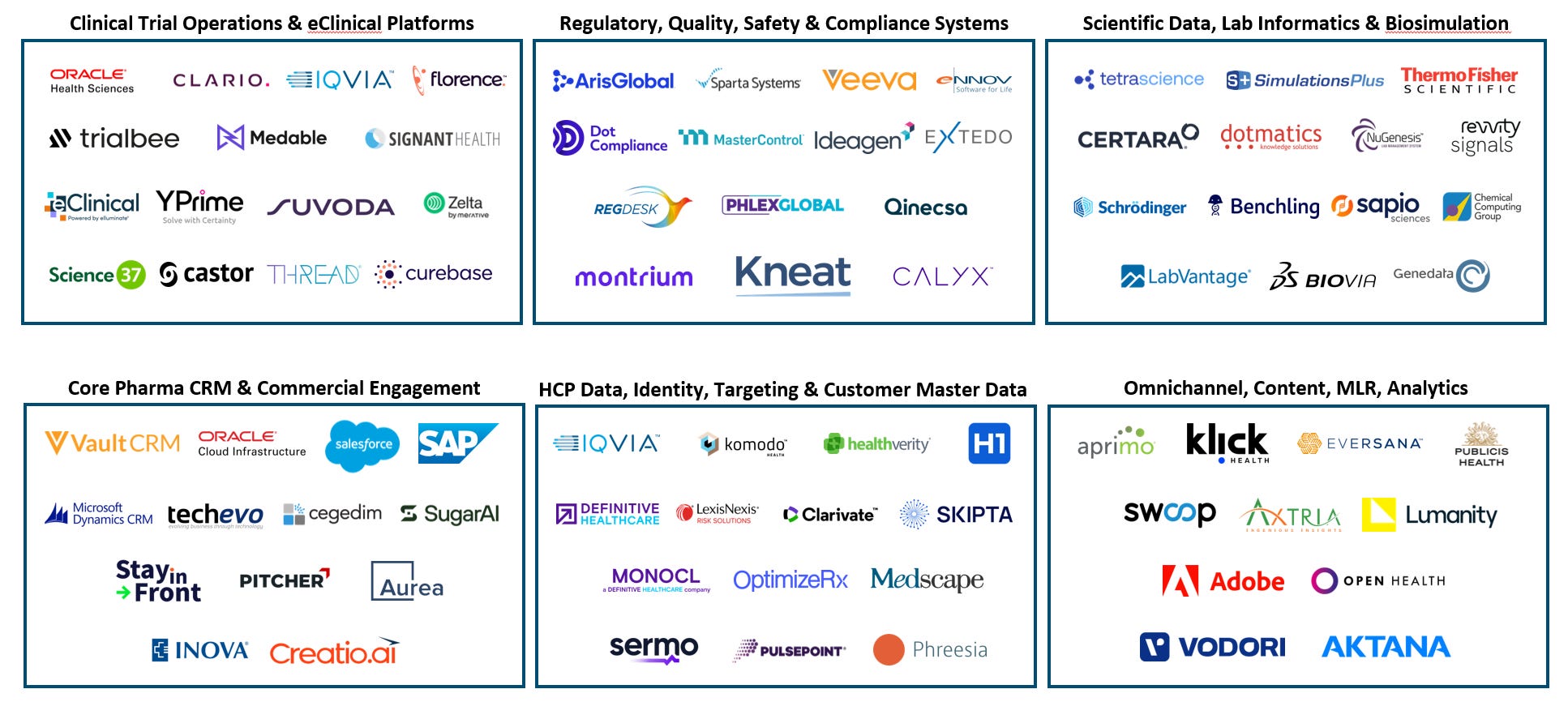
Life sciences technology supports drug development through clinical-trial software, data management, regulatory systems, lab informatics, and biosimulation, while pharma CRM platforms coordinate compliant engagement with healthcare professionals.
The sector is moving toward AI-enabled R&D, connected laboratories, automated regulatory documentation, omnichannel engagement, and next-best-action tools. CRM re-platforming is also accelerating as Veeva transitions customers to Vault CRM and Salesforce re-enters through Life Sciences Cloud.
Funding and M&A interest is strongest where platforms reduce development timelines, improve trial execution, automate regulated workflows, or connect proprietary scientific and commercial datasets. Large strategic transactions indicate that scaled clinical-research infrastructure and differentiated data assets remain highly valuable.
Please open the full report below: