

Neuromodulation is emerging as an increasingly important segment of the medical device industry, driven by advances in neural stimulation, expanding therapeutic applications, and growing strategic investment. The market is evolving from traditional implantable devices toward intelligent, adaptive, and non-invasive platforms, creating new opportunities for medical device manufacturers, investors, and healthcare providers.
Neuromodulation Market Overview
Market Landscape
Expanding Therapeutic Applications: Neuromodulation devices use targeted electrical, magnetic, or other forms of stimulation to treat chronic pain, movement disorders, epilepsy, depression, and pelvic health conditions. Emerging applications in inflammatory diseases and neurological rehabilitation are broadening the addressable market.
Technological Innovation: Closed-loop stimulation, AI-enabled programming, miniaturized implants, and wireless connectivity are improving treatment personalization, procedural efficiency, and patient management.
Favorable Demographic Trends: Aging populations, increasing prevalence of neurological disorders, and growing demand for non-pharmacological therapies are supporting long-term market adoption.
Established Market Leadership: Medtronic, Abbott, and Boston Scientific maintain strong competitive positions through extensive product portfolios, physician relationships, clinical evidence, and established reimbursement infrastructure.
Market Size & Growth Outlook
Global Market Expansion: The implantable neuromodulation and neuroprosthetics market was estimated at approximately $8.2 billion in 2025 and is projected to reach $13.5 billion by 2030, representing an 8.8% CAGR.
Spinal Cord Stimulation (SCS): SCS remains the largest established pain-management segment, with an estimated global market of $2.3–$2.7 billion. Adaptive stimulation and closed-loop technologies are supporting continued innovation.
Peripheral Nerve Stimulation (PNS): PNS is emerging as a high-growth segment, expanding at approximately 22% annually as minimally invasive, non-opioid pain-management alternatives gain traction.
Regional Growth: North America remains a leading market, supported by established reimbursement and advanced healthcare infrastructure, while Asia-Pacific presents significant growth opportunities as access to neuromodulation therapies expands.
Evolution of Neuromodulation Technologies
Neuromodulation is progressing through three broad technology generations, with innovation increasingly focused on precision, automation, and accessibility.

Generation 1: Established Implantable Technologies
Traditional implantable platforms established neuromodulation as a commercially viable therapeutic category.
Deep Brain Stimulation (DBS): Delivers electrical stimulation to targeted brain regions, primarily for movement disorders such as Parkinson’s disease.
Spinal Cord Stimulation (SCS): Modulates spinal pain pathways to treat chronic neuropathic pain.
Vagus Nerve Stimulation (VNS): Stimulates the vagus nerve for conditions including epilepsy and treatment-resistant depression.
Sacral Neuromodulation (SNM): Targets sacral nerve pathways to manage bladder and bowel dysfunction.
These established platforms benefit from clinical validation and reimbursement pathways but require surgical implantation, specialized programming, and ongoing clinical support.
Generation 2: Next-Generation Implantables
The next technology cycle is shifting from fixed stimulation toward adaptive, sensing-enabled devices.
Closed-Loop Stimulation: DBS and SCS platforms increasingly incorporate physiological sensing to automatically adjust stimulation based on patient responses.
Miniaturized & Targeted Implants: Smaller devices, advanced electrode designs, and targeted PNS technologies are reducing hardware burden and enabling more localized therapy.
Software-Driven Optimization: AI-enabled programming, remote monitoring, and automated therapy adjustments are reducing clinician workload and improving treatment personalization.
Connected Care: Cloud-based platforms and wireless connectivity are extending therapy management beyond the initial implantation procedure.
Generation 3: Non-Invasive & Emerging Technologies
Non-invasive technologies are expanding neuromodulation beyond surgical procedures and specialized treatment centers.
Transcranial Magnetic Stimulation (TMS): An established non-invasive treatment platform for depression and certain other neuropsychiatric disorders.
Focused Ultrasound (FUS): Uses acoustic energy for targeted neurological interventions, with emerging applications in reversible neuromodulation.
Transcutaneous Nerve Stimulation: External stimulation of peripheral or cranial nerves is enabling less-invasive approaches across pain management and neurological conditions.
Wearable & At-Home Platforms: Portable stimulation devices and remotely supervised treatment models could expand access and reduce dependence on repeated clinic visits.
Neuromodulation Business Models
Established Implantable Platforms
Implant-Driven Revenue: Manufacturers generate revenue primarily through implantable pulse generators, leads, and associated components sold during implantation procedures.
Recurring Replacement Revenue: Battery replacements, device upgrades, and subsequent procedures create recurring revenue opportunities across the patient lifecycle.
Integrated Platform Economics: Proprietary implants, programming systems, software, and clinical workflows create integrated ecosystems that reinforce customer retention and switching costs.
Next-Generation Implantables
Hybrid Commercial Models: Emerging manufacturers are exploring licensing, leasing, and flexible financing arrangements alongside traditional hardware sales.
Software Monetization: Remote programming, therapy optimization, and analytics platforms are creating opportunities for subscription-based and usage-linked software revenue.
Longitudinal Data Value: Sensing-enabled devices generate physiological data that can support ongoing therapy optimization and potentially enable additional digital services.
Non-Invasive Technologies
Capital Equipment Sales: Clinic-based platforms such as TMS systems generate revenue through equipment sales to hospitals and treatment centers.
Recurring Revenue Models: Leasing, per-treatment fees, and software licensing are increasing revenue visibility while lowering upfront investment requirements for providers.
Commercial Model Innovation: BrainsWay structures approximately 70% of new customer agreements as multi-year recurring contracts, typically spanning four to five years.
Neuromodulation M&A and Private Capital Activity
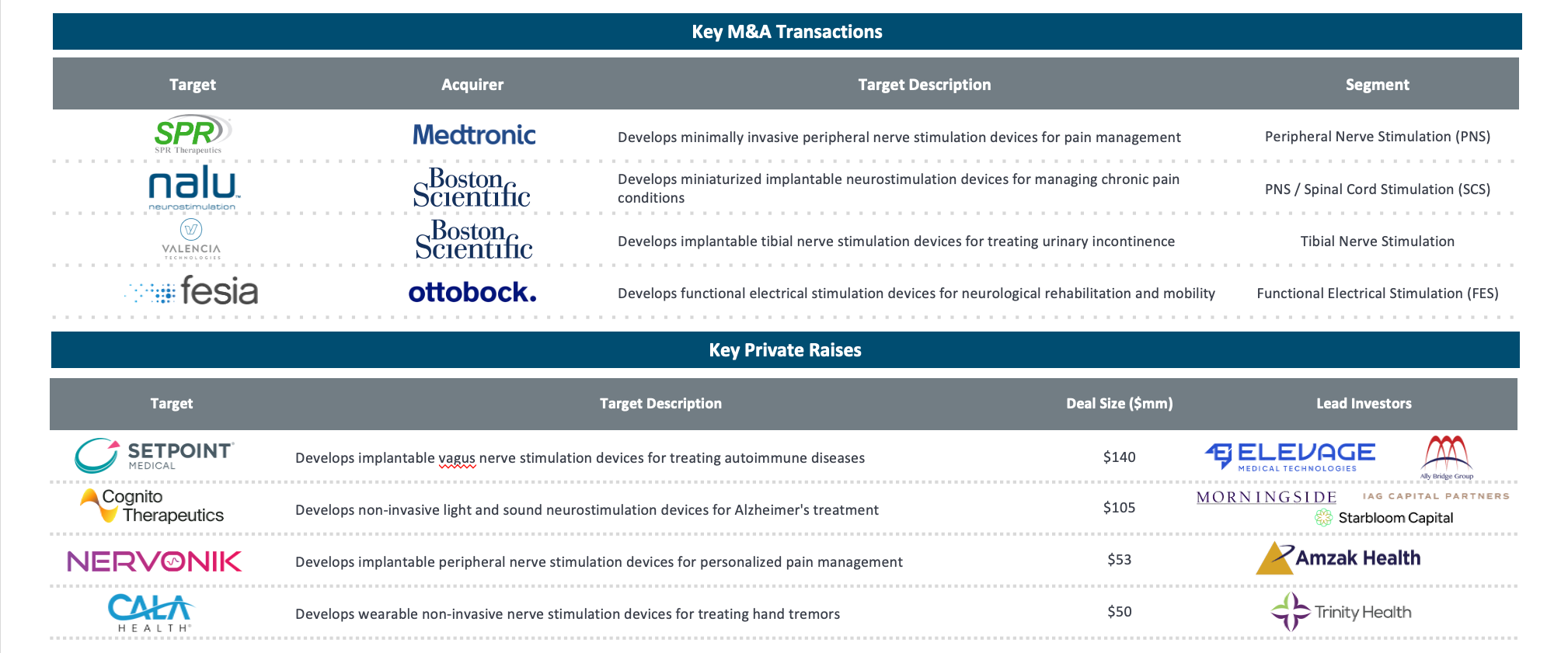
Strategic M&A Activity
Strategic acquirers are expanding their neuromodulation portfolios through acquisitions of differentiated technologies, particularly in peripheral nerve stimulation and minimally invasive therapeutic platforms.
Medtronic / SPR Therapeutics: Expands Medtronic’s presence in minimally invasive peripheral nerve stimulation for pain management.
Boston Scientific / Nalu Medical: Strengthens Boston Scientific’s chronic pain portfolio through miniaturized implantable neurostimulation technology.
Boston Scientific / Valencia Technologies: Expands Boston Scientific’s pelvic health capabilities through implantable tibial nerve stimulation technology.
Ottobock / Fesia Technology: Adds functional electrical stimulation capabilities focused on neurological rehabilitation and mobility.
Select Private Raises
These selected transactions illustrate investor interest across implantable, wearable, and non-invasive technologies, with capital supporting clinical development, commercialization, and expansion into new therapeutic indications.
Neuromodulation Industry Outlook
Adaptive Stimulation Reshaping Therapy Delivery: Closed-loop DBS and SCS systems are shifting treatment from fixed stimulation toward real-time, patient-responsive therapy, improving precision and supporting product differentiation.
PNS Attracting Strategic Investment: Minimally invasive peripheral nerve stimulation is gaining momentum as manufacturers seek differentiated, non-opioid pain-management technologies with expanding clinical applications.
Software Becoming a Competitive Differentiator: AI-driven programming, remote monitoring, and automated therapy optimization are extending device functionality beyond hardware and creating opportunities for recurring software revenue.
Non-Invasive Platforms Expanding Treatment Access: TMS, transcutaneous stimulation, and wearable technologies are reducing procedural barriers and supporting the migration of selected treatments toward outpatient and at-home settings.
Recurring Revenue Models Gaining Traction: Leasing, per-treatment fees, software subscriptions, and replacement cycles are creating opportunities for manufacturers to generate revenue beyond initial device sales.
Reimbursement Remains Critical to Commercial Adoption: Established technologies benefit from defined coding and coverage pathways, while emerging platforms must demonstrate clinical efficacy, favorable provider economics, and payer acceptance to achieve scale.
Strategic Consolidation Expected to Continue: Large MedTech manufacturers are positioned to pursue acquisitions of innovative neuromodulation technologies to strengthen product portfolios, expand therapeutic coverage, and leverage established commercial infrastructure.
Healthcare Desk Perspective
Neuromodulation represents an attractive area of MedTech innovation, with technological advancements and expanding clinical applications creating opportunities across established and emerging platforms.
From an investment perspective, the most compelling opportunities are likely to combine differentiated clinical outcomes, scalable commercialization models, and sustainable recurring revenue streams.
While established manufacturers retain advantages in reimbursement, physician relationships, and commercial infrastructure, emerging companies developing targeted stimulation, adaptive therapies, and non-invasive platforms may become attractive acquisition or partnership candidates.
As neuromodulation evolves toward more intelligent, connected, and accessible treatment systems, strategic M&A and private capital investment are expected to remain important drivers of market development.
See More on the Report Below
